Women Couriers Exploited in Cannabis Smuggling Networks Across Andhra-Odisha Border
In a disturbing trend, inter-state cannabis smuggling networks operating along the Andhra Pradesh–Odisha border have begun recruiting women as couriers to transport small consignments across the country. This strategic shift aims to evade intensified police crackdowns by exploiting perceived gender biases in passenger screening.
Targeting Vulnerable Women for Easy Money
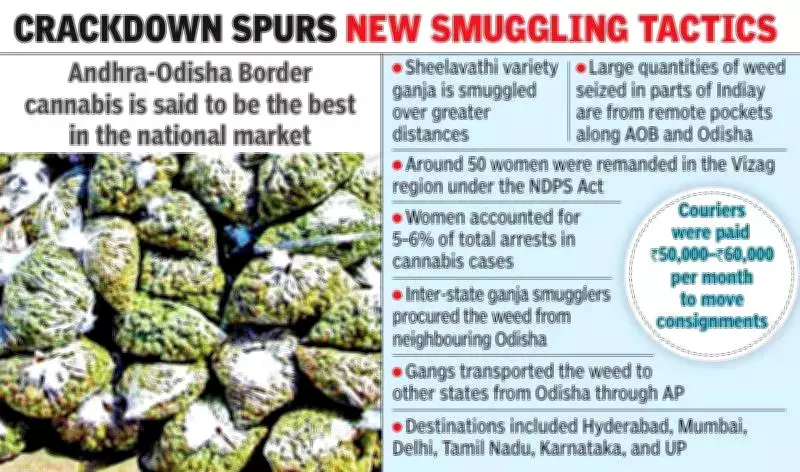
Authorities report that women from economically disadvantaged backgrounds in states such as Odisha, Bihar, Tamil Nadu, and Karnataka are being lured into the trade with promises of quick cash. Many are relatives of petty smugglers, drawn by monthly payments ranging from ₹50,000 to ₹60,000. Police in north Andhra districts—including Visakhapatnam, Vizianagaram, Srikakulam, Parvathipuram Manyam, Anakapalle, and Alluri Sitharama Raja—have arrested more than 30 women in the past three to four months for involvement in cannabis transportation.
Evolving Tactics to Avoid Detection
Smugglers prefer women couriers because female passengers are often subjected to less rigorous checks during travel. Without specific intelligence, police find it challenging to identify these peddlers, who sometimes pose as tourists to blend in. Couriers typically procure cannabis and hash oil from border areas, using public transport like trains to move consignments to major cities such as Hyderabad, Mumbai, Delhi, Tamil Nadu, Karnataka, and Uttar Pradesh.

To minimize risk, couriers avoid sitting near baggage containing 3–5 kg of contraband and are instructed to abandon bags if confronted by authorities, allowing them to escape detection. In some instances, women have traveled by car, maintaining a tourist facade while transporting illegal substances.
Police Response and Challenges
Although women account for only 5–6% of total arrests in cannabis cases, police emphasize that their role cannot be ignored. This trend reflects the adaptive strategies of smuggling networks under enforcement pressure, leveraging social perceptions and loopholes in passenger screening processes.
Officials highlight the urgent need for stronger intelligence-based operations and community awareness programs to curb the recruitment of vulnerable women into this illegal trade. They point out that traffickers are exploiting poverty and lack of livelihood opportunities, offering deceptive promises of financial stability.
Ongoing Crackdown and Preventive Measures
The crackdown continues across north Andhra, with police vowing to dismantle these networks and prevent further exploitation of women couriers. Surveillance has been intensified at key points such as railway stations, bus stands, and border check-posts. Special teams are being deployed to monitor and track the movement of couriers, aiming to disrupt smuggling activities effectively.
This situation underscores the broader issues of economic vulnerability and the need for comprehensive strategies to address both the supply and demand sides of drug trafficking in the region.