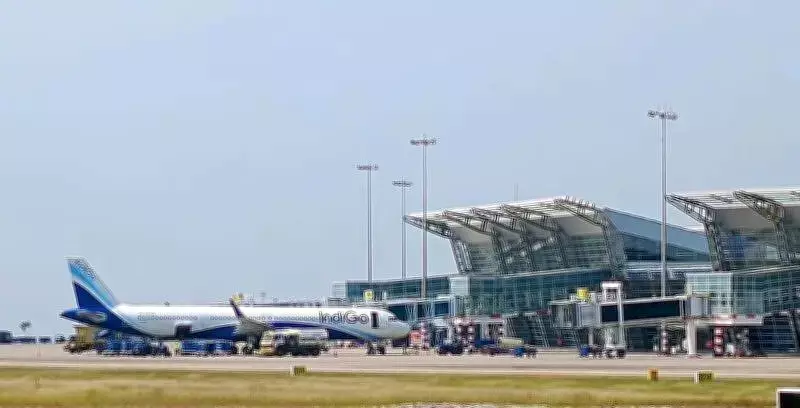
West Asia Conflict Severely Disrupts International Flights from Mangaluru
The ongoing war in West Asia has dealt a heavy blow to international flight operations at Mangaluru International Airport (MIA), leading to widespread cancellations and a significant downturn in passenger numbers. Data reveals that major airlines have scrapped hundreds of flights in recent months, drastically altering the airport's connectivity and growth trajectory.
Massive Flight Cancellations by Key Airlines
According to available figures, IndiGo cancelled a total of 100 international flights between February 28 and March 31. This included 49 arrivals and 51 departures, highlighting the initial impact of the geopolitical tensions. However, Air India Express (AIX), which operates a substantial portion of Gulf-bound services from Mangaluru, reported a much higher toll. The airline cancelled 344 international flights during the same period, comprising 170 arrivals and 174 departures, underscoring the severe disruption to routes heavily dependent on West Asian destinations.
Drastic Reduction in Operational Routes
In the winter schedule of 2025-26, MIA offered flights to multiple key destinations, including Abu Dhabi, Dubai, Kuwait, Dammam, Bahrain, Doha, and Jeddah. However, since the start of the summer schedule on March 29, operations have been drastically scaled back. Currently, flights are only being operated to Jeddah, Abu Dhabi, and Dubai. From March 29 to April 6, MIA recorded just nine international departures and 12 arrivals, all handled by Air India Express, indicating a stark contraction in services.

Sharp Decline in Passenger Traffic and Airport Activity
Before the West Asia crisis erupted, Mangaluru International Airport was experiencing steady month-on-month growth in both passenger traffic and air traffic movements (ATMs). The airport achieved its highest-ever monthly passenger traffic in January this year, handling a total of 245,708 passengers. Of these, 163,966 were domestic travellers, while 81,742 were international passengers. In terms of flight activity, the peak was registered in October of the previous year, when MIA managed a record 1,641 ATMs, including 1,240 domestic movements, 379 international operations, and 22 general aviation movements.
The conflict has severely disrupted the global travel industry, and the effects are acutely visible at MIA, where daily passenger numbers have plummeted from approximately 9,000 to nearly 5,000. This decline is particularly striking given that MIA had been on a consistent growth path since its commercial operations commenced on October 31, 2020.
Tourism Industry Feels the Pinch
Vathika Pai, proprietor of Vathika International Travels, confirmed that the ongoing West Asia turmoil has significantly impacted the tourism sector. "We have witnessed numerous cancellations for popular destinations such as Dubai and Abu Dhabi," she stated. "Typically, demand for UAE tours tends to dip during April and May due to the onset of summer, but the current geopolitical situation has exacerbated this decline." Despite this, Pai noted that there remains steady demand for alternative destinations like Thailand, Malaysia, and Singapore. However, she added, "There is a clear dent in overall travel sentiment, as many individuals are now hesitant to embark on international journeys amid the ongoing crisis."
The situation at Mangaluru International Airport serves as a microcosm of the broader challenges facing aviation and tourism due to geopolitical instability, with recovery likely dependent on the resolution of the West Asia conflict.