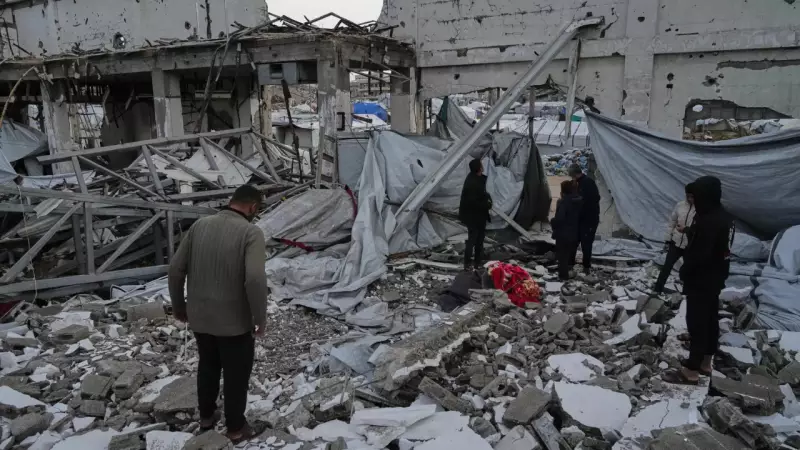
The United States is now advancing into the second phase of its detailed Gaza ceasefire strategy. Special Presidential Envoy Steve Witkoff made this significant announcement. This next stage aims to disarm Hamas, rebuild the devastated Gaza Strip, and install a new technocratic Palestinian administration. This administration will manage Gaza's daily affairs under direct American oversight.
Announcing the Next Steps
Steve Witkoff shared the news in a post on the social media platform X. He wrote on behalf of President Trump. The message confirmed the launch of Phase Two of the President's 20-Point Plan to End the Gaza Conflict. This phase shifts the focus from maintaining a ceasefire to active demilitarization, establishing new governance, and starting reconstruction work.
What Phase Two Involves
Witkoff provided more details about the plan's components. Phase Two will formally create a transitional technocratic Palestinian administration for Gaza. This body will be called the National Committee for the Administration of Gaza (NCAG). Its immediate tasks include starting the full demilitarization and reconstruction of the territory. A primary goal is the disarmament of all unauthorized armed personnel.

The US envoy issued a clear expectation. He stated that Washington expects Hamas to comply fully with all its obligations under the agreement. This includes the immediate return of the final deceased hostage still in its custody. Witkoff warned that failure to meet these demands would result in serious consequences.
Building on Phase One
Witkoff also reflected on the accomplishments of the first phase, calling it historic. He highlighted that Phase One successfully delivered critical humanitarian aid to Gaza. It maintained the ceasefire that took effect in October. Furthermore, it secured the return of all living hostages and the remains of twenty-seven out of twenty-eight deceased hostages.
The envoy expressed deep gratitude to several key mediators. He specifically thanked Egypt, Turkey, and Qatar for their indispensable efforts. Their mediation made all the progress achieved so far possible.
Unanswered Questions and Major Challenges
Despite the announcement, many crucial details remain unclear. Witkoff did not name who would serve in the new transitional Palestinian administration. The White House also did not provide immediate further clarification on this point.
The plan faces substantial hurdles on the ground. A major challenge involves deploying an international security force to oversee the agreement's implementation. Another complex task is navigating the actual process of disarming Hamas after its 18-year rule over Gaza.
The New Governance Structure
Under the proposed plan, a technocratic committee will assume responsibility for Gaza's day-to-day governance. The individuals appointed to this committee have not been publicly named. They will operate under the oversight of a Trump-led entity called the Board of Peace. The members of this oversight board have also not been disclosed.
Daunting Reconstruction and Governance Tasks
The new committee will be tasked with delivering essential public services to Gaza's population of over 2 million residents. However, it confronts immense challenges. Key questions persist regarding the committee's actual authority, its operational capacity, and its sources of funding.
The scale of reconstruction is enormous. United Nations estimates suggest rebuilding Gaza will cost more than $50 billion and could take several years. To date, only limited funding has been pledged for this massive undertaking.
The ceasefire itself, based on Trump's 20-point plan, largely halted fighting when it took effect. During the initial phase, Hamas released all but one hostage. In return, Israel released hundreds of Palestinian prisoners. The success of the next phase now depends on navigating these complex political and logistical challenges.