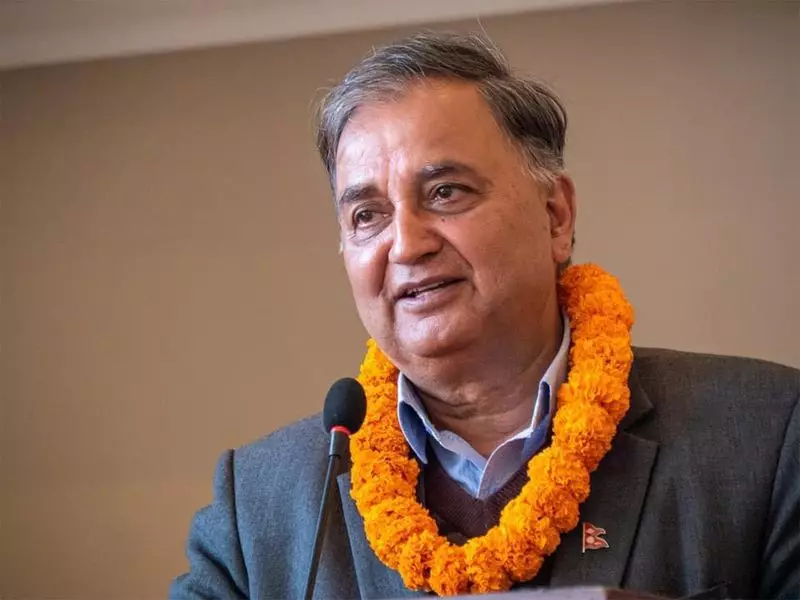
Nepal's political landscape is set for a significant upheaval as the Communist Party of Nepal (Unified Marxist-Leninist) faces an internal leadership battle. Senior Vice Chairman Ishwar Pokharel has officially announced his intention to challenge incumbent Chairman KP Sharma Oli during the party's upcoming general convention.
Leadership Challenge Rocks Nepal's Major Political Party
The political tension within UML has been building for months, culminating in Pokharel's bold decision to contest against the current party chairman. The general convention, scheduled to begin on Friday, will witness this high-stakes leadership contest that could redefine the future direction of one of Nepal's most influential political parties.
Pokharel's decision to challenge Oli represents a significant departure from the party's traditional unity. As one of the most senior leaders within UML, his candidacy signals deep internal divisions and dissatisfaction with the current leadership approach. The challenge comes at a critical juncture for the party, which has been navigating complex political alliances and governance challenges in Nepal's evolving democratic landscape.
Background of the Political Rivalry
The relationship between Pokharel and Oli has been increasingly strained in recent times, with differences emerging over party strategy and leadership style. Pokharel, who has served as senior vice chair for several years, brings substantial political experience and a different vision for the party's future direction.
KP Sharma Oli, the current chairman, has been a dominant figure in Nepali politics for decades. His leadership has seen both significant achievements and notable controversies, particularly concerning party unity and coalition management. The upcoming convention will serve as a referendum on his leadership style and political decisions during his tenure.
Implications for Nepal's Political Future
The outcome of this leadership contest will have far-reaching consequences beyond the internal dynamics of UML. As one of the major political forces in Nepal, UML's leadership direction directly impacts national governance and the stability of ruling coalitions. The party has played a pivotal role in shaping Nepal's constitutional development and international relations.
Political analysts are closely watching this development, noting that a leadership change could signal shifts in Nepal's foreign policy, particularly regarding relationships with neighboring countries including India and China. The election results could also influence upcoming national elections and the formation of future governments.
The general convention is expected to draw thousands of party delegates from across Nepal, making it one of the most significant political events in the country this year. Both candidates are likely to present their visions for the party's future, addressing critical issues such as economic development, constitutional implementation, and international diplomacy.
As the convention approaches, both factions within UML are expected to intensify their campaigning efforts. The leadership contest between Pokharel and Oli represents not just personal ambition but competing visions for the party's ideological direction and political strategy in contemporary Nepal.