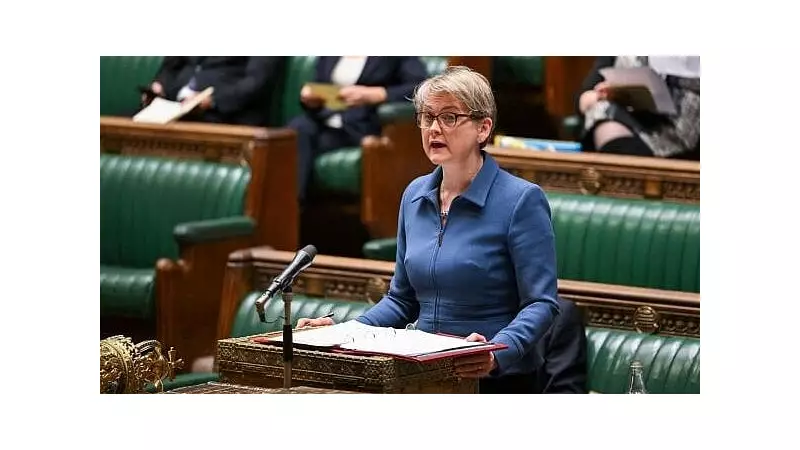
In a significant diplomatic development at the World Economic Forum in Davos, the United Kingdom has officially declined to become a signatory to former US President Donald Trump's proposed 'Board of Peace' treaty. British Foreign Minister Cooper made this announcement during an interview with BBC News, highlighting the UK's reservations about the legal framework and the participation of Russian President Vladimir Putin.
Legal and Broader Concerns Cited
Foreign Minister Cooper emphasized that the decision stems from the treaty's nature as a legal document that raises much broader issues beyond immediate peace talks. "We won't be one of the signatories today, because this is about a legal treaty that raises much broader issues," Cooper stated. This indicates that the UK government is taking a cautious approach, likely due to potential implications for international law and existing diplomatic agreements.
Objection to Putin's Involvement
A key factor in the UK's refusal is the inclusion of Russian President Vladimir Putin in the peace discussions. Cooper explicitly mentioned, "We do also have concerns about (Russian) President Putin being part of something which is talking about peace." This reflects ongoing tensions between the UK and Russia, particularly in the context of global conflicts and geopolitical rivalries, suggesting that the UK views Putin's role as incompatible with genuine peace efforts.

Context of the Davos Announcement
The announcement was made from Davos, Switzerland, where global leaders are gathered for the annual World Economic Forum. This setting underscores the international significance of the treaty proposal and the UK's stance. The timing, on January 22, 2026, places this event in a post-2024 political landscape, with Donald Trump potentially involved in US politics again, adding layers to the diplomatic dynamics.
Implications for International Relations
The UK's decision not to sign the 'Board of Peace' treaty could have ripple effects across global diplomacy. It may signal a divergence in foreign policy approaches between the UK and the US under Trump's influence, as well as reinforce the UK's alignment with European and NATO allies who share concerns about Russia. This move might also influence other nations considering the treaty, potentially leading to a fragmented response to Trump's initiative.
As the situation unfolds, observers will be watching for reactions from other key players, including the United States and Russia, to gauge the treaty's viability and the broader impact on peace efforts worldwide.