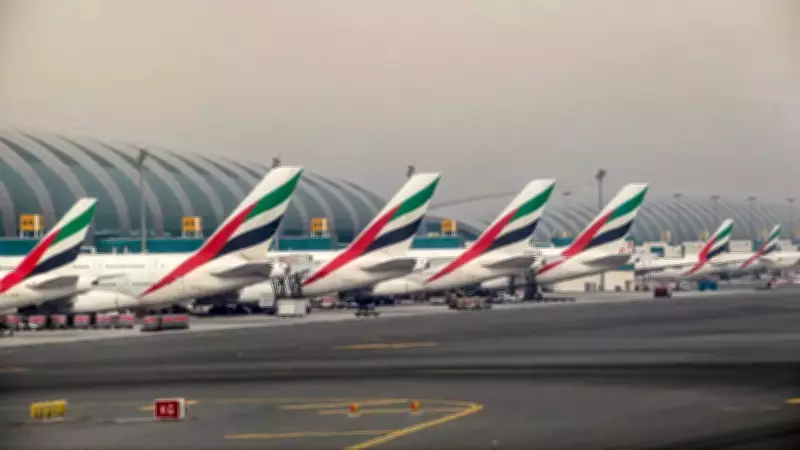
UAE Airlines Forced to Limit Operations as Regional Conflict Escalates Airspace Restrictions
As the Iran–US–Israel conflict intensifies, spreading airspace restrictions across the Middle East, the United Arab Emirates' major airlines, including Emirates, Etihad Airways, flydubai, and Air Arabia, have been compelled to operate only limited services. The vast majority of regular scheduled flights remain suspended indefinitely. This drastic measure forms part of broader safety and operational precautions amid regional instability that is severely impacting aviation hubs throughout the Gulf region.
Current Status of UAE Flight Operations Amidst Regional Tensions
Following widespread airspace closures triggered by escalating military tensions, which involve airspace managed or affected by Iran, Iraq, Qatar, Bahrain, Kuwait, Saudi Arabia, and the UAE, scheduled commercial flights were abruptly halted across the UAE. In response, authorities and airlines have initiated a gradual, controlled resumption of services using specially designated emergency air corridors. These corridors are engineered to maintain the highest safety standards while providing some relief to stranded travelers.
The General Civil Aviation Authority (GCAA) has reported that flights are currently operating at approximately 48 aircraft movements per hour through these carefully planned emergency corridors. This capacity is subject to potential expansion if the security situation shows signs of improvement. Since the beginning of March 2026, over 17,000 passengers have been transported on limited coverage flights, including repatriation efforts and essential departures, across various UAE airports. The next operational phase aims to achieve around 80 flights per hour, potentially facilitating the movement of up to 27,000 passengers daily once arrangements are fully scaled up. Despite these concerted efforts, most regular commercial services continue to be on hold.
For instance, Emirates has extended the suspension of all scheduled flights until mid-March as part of an ongoing assessment of safety protocols and airspace conditions. This decision underscores the airline's commitment to passenger and crew safety above all else.
Reasons Behind Limited Flight Operations in the UAE
The limited flight operations represent emergency aviation measures adopted in close coordination with civil and military authorities. These measures are designed to balance two critical priorities:
- Ensuring Passenger Safety – In the wake of escalating violence involving Iran, the US, and Israel, several Gulf states imposed partial or total airspace closures. These closures disrupt normal flight paths and introduce significant risks for civilian aircraft. Operating full timetables under such volatile conditions could jeopardize safety, especially given the rapid and unpredictable changes in airspace restrictions.
- Managing Humanitarian and Evacuation Needs – Limited flights prioritize the repatriation of stranded residents, citizens, and foreign nationals, as well as addressing urgent travel requirements. Charter flights, cargo operations, and repositioning flights have been permitted alongside a core set of scheduled services that meet stringent safety criteria and cater to confirmed travelers.
Airlines are strictly permitting only passengers with confirmed bookings to enter terminal facilities. Airport authorities are urgently advising travelers not to proceed to airports unless explicitly notified by their respective carriers. This policy helps prevent overcrowding and minimizes unnecessary exposure to potential risks.
Specific Impacts on Major UAE Airlines
Emirates: Operating a small number of flights that prioritize affected passengers, while the majority of scheduled flights remain suspended. All scheduled Emirates flights to and from Dubai are suspended until 11:59 AM UAE time on March 7 due to ongoing regional airspace closures. The airline is currently running a limited schedule, focusing on passengers with confirmed bookings. Transit travelers will only be accepted if their onward connections are operational. Passengers are strongly advised against traveling to the airport unless they hold a confirmed booking or have received direct notification from Emirates. Real-time updates are accessible via emirates.com and registered email alerts. Emirates has reiterated that passenger and crew safety remains its highest priority. City check-in facilities are temporarily closed until further notice.
Etihad Airways: Conducting repatriation, repositioning, and some limited services in coordination with authorities; scheduled services remain suspended for numerous destinations. All scheduled commercial services to and from Abu Dhabi are suspended until 2:00 PM on March 5, 2026. Select repositioning, cargo, and repatriation flights may operate, subject to strict regulatory and safety approvals. Guests should verify their flight status on etihad.com and ensure their contact details are updated. Tickets issued on or before February 28, 2026, for travel up to March 10, may be rebooked free of charge until March 31, 2026. Refunds can be processed online or through travel agents.
flydubai: Partially resumed operations from key terminals at Dubai International Airport, with regular capacity still restricted. Limited flights have resumed from Terminals 2 and 3 at Dubai International (DXB) since March 3, 2026. Passengers impacted by recent disruptions are being prioritized for rebooking. Only travelers with confirmed bookings should head to the airport. Customers are advised to update contact details via “Manage Your Booking” and monitor communications from flydubai or their travel agents. The rebooking policy includes complimentary rebooking to the same destination within 20 days of the original travel date. Assistance is available through the flydubai Contact Centre (+971 600 54 44 45), travel shops, or agents.
Air Arabia: Temporarily suspended flights to and from Sharjah and other UAE airports, though special and emergency services may operate in coordination with authorities. Air Arabia flights to and from the UAE remain suspended until 3:00 PM UAE time on Monday, March 9, 2026. A limited number of flights are operating under safety and regulatory approvals. Affected passengers will be contacted directly. Others are advised not to proceed to the airport unless notified. Rebooking and refund options include one complimentary date change within 15 days, a full credit voucher, or a full refund to the original mode of payment. Passengers should regularly monitor flight status updates and ensure their contact information is current.
Air India Express: Services to and from Muscat resumed on March 5, alongside additional flights between Muscat, Delhi, and Mumbai. The airline is also operating special flights from Ras Al Khaimah connecting Delhi, Kochi, and Mumbai through March 7. Passengers are advised to check their flight status and ensure contact details are updated in their PNR. For rebooking or cancellations, travelers may visit airindiaexpress.com/manage-booking or utilize the airline’s chat and WhatsApp support services.
Meanwhile, several international airlines have also initiated limited departures or repatriation flights into and out of the UAE, including regional carriers and some long-haul services. However, these operations remain the exception rather than the norm. The disruption extends beyond the UAE, affecting thousands of services across the Gulf region. Tens of thousands of flights have been cancelled globally, with major hubs like Dubai International, Abu Dhabi’s Zayed International, and Doha’s Hamad International experiencing significant impacts.
Airspace restrictions are influencing flights from Europe, Asia, and the United States, redirecting long-haul travel and creating cascading delays worldwide. Travel advisories from countries such as the United States and India have urged citizens to seek alternate routes home or arrange departures via special flights where feasible. This situation continues to evolve daily, with airlines adjusting operations in real time based on the security outlook and regulatory guidance from aviation authorities.
Guidance for Stranded Passengers in the UAE
- Only confirmed travelers should proceed to the airport; others risk being turned away due to restricted access.
- Check flight status frequently via your airline’s official app or website, as schedules can change rapidly.
- Airlines are offering rebooking and refund options for affected passengers, with flexible policies to help manage the disruption.
- Safety remains the top priority, and airlines will only expand operations when authorities deem it secure to do so.
UAE aviation is currently in a cautious phase of limited resumption, striving to balance the urgent need to move stranded passengers with the imperative of safety amid broader regional airspace disruptions driven by the Iran–US–Israel conflict.