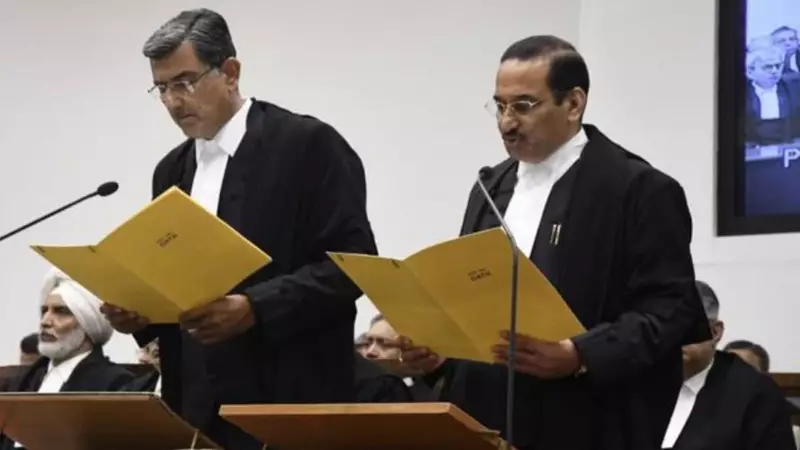
In a significant move to bolster the judiciary, two judicial officers from Haryana were elevated and sworn in as additional judges of the Punjab and Haryana High Court on Thursday, January 8, 2026.
Oath Ceremony and Judicial Background
The swearing-in ceremony was held on the high court premises, with Chief Justice Sheel Nagu administering the oath of office. The newly appointed judges are Justice Ramesh Chander Dimri and Justice Neerja Kulwant Kalson.
Prior to their elevation to the high court bench, Justice Dimri served as the District and Sessions Judge in Yamunanagar. Justice Kalson held the position of District and Sessions Judge in Rohtak. Both officers hail from the Haryana judicial service.
Process of Appointment and Current Court Strength
Their appointments were formally notified by the Union Government on January 2, 2026. This notification came after a recommendation by the Supreme Court collegium dated December 16, 2025.
With these two new inductions, the working strength of the Punjab and Haryana High Court has now increased to 61 judges. However, the court continues to operate below its full capacity, as the sanctioned strength is 85 judges, leaving a significant number of vacancies still to be filled.
Impact on Pendency and Future Tenure
The appointments are seen as a crucial step in addressing the massive caseload burdening the court. According to the National Judicial Data Grid (NJDG), approximately 4.20 lakh cases are pending before the Punjab and Haryana High Court. Notably, this figure reflects a reduction of over 11,000 cases compared to the pendency in January 2025.
As additional judges, Justices Dimri and Kalson have been appointed for an initial term of two years. Their confirmation as permanent judges will depend on an assessment of their performance during this period.
These elevations are part of ongoing efforts to fill judicial vacancies in the common high court, which serves the states of Punjab and Haryana, along with the Union Territory of Chandigarh. The legal community expects the new appointments to help ease delays and expedite the delivery of justice across the region.