Trump's Greenland Demand Sparks NATO's Worst Crisis Since World War II
The Western alliance faces its gravest challenge in decades. President Trump's push for a full U.S. takeover of Greenland has ignited a fierce trans-Atlantic conflict. His threat to impose tariffs on European allies resisting this move merges trade and security tensions into a volatile mix.
A Shattered Foundation of Trust
NATO has long relied on trust and political cohesion among its members. The belief that the United States would defend its European partners formed the bedrock of the alliance's credibility. That foundation now cracks under pressure.
"World Peace is at stake!" Trump declared on Truth Social. He argued that China or Russia might seize Greenland unless America acts. The President criticized European NATO members for sending military personnel to the territory at Denmark's invitation.
He insists only the U.S. can secure the island. Trump followed with a tariff threat, promising escalating duties until allies agree to U.S. ownership of Greenland.
European Shock and Strategic Dilemmas
European governments reel from this unprecedented hostility. They struggle to craft a response, balancing fear of provoking Trump further with a firm stance on Greenland's sovereignty.
Some nations consider showing Trump that his pressure carries consequences. They might jeopardize a recent trade deal with the European Union that benefits American businesses. Other leaders seek to defuse tensions through behind-the-scenes outreach.
Denmark and seven European allies issued a joint statement on Sunday. They warned that tariff threats "undermine transatlantic relations and risk a dangerous downward spiral." The group pledged "to stand united and coordinated in our response."
The Erosion of Atlantic Unity
For years, European countries avoided criticizing Trump despite deep misgivings. Their strategy traded economic benefits for security assurances. Allied leaders used flattery and deference to manage the White House.
NATO Secretary-General Mark Rutte even called Trump "daddy" last summer. Yet Europeans now worry such displays fail to work. Many fear a full rift could lead Trump to declare NATO's end.
That would force Europe to build its own military alliance without U.S. support—a costly challenge for economies with low growth and strained finances.
Historical Context and Current Tensions
Early last year, White House verbal barrages and policy shifts suggested America turned its back on the trans-Atlantic world. The administration attacked European democracies over immigration and free speech. It threatened heavy tariffs on European goods.
Relations seemed to thaw last summer after European efforts to prove allies serve U.S. interests. In June, Trump blessed NATO after allies agreed to boost defense spending. By August, European leaders felt cautiously optimistic about stability.
That optimism faded quickly. Trust suffered another blow when a U.S. peace plan for Ukraine favored Russia. Then December's national-security strategy targeted European allies while softening on Russia and China.
Questioning Past Sacrifices
Europeans highlight their longstanding support for America. NATO invoked its mutual-defense clause only once—to back the U.S. after the 9/11 attacks. In Afghanistan, Denmark suffered the highest per capita fatality rate among NATO countries.
Now the administration dismisses these past efforts. "Just because you did something smart 25 years ago doesn't mean you can't do something dumb now," Vice President JD Vance told Fox News recently.
Trump repeatedly casts doubt on U.S. readiness to honor Article 5 commitments. During his first term, he stunned allies by not pledging to defend NATO members at alliance headquarters. In his 2024 campaign, Trump said he would encourage Russia to act against allies missing spending targets.
Global Repercussions and European Perplexity
Veterans warn that Western adversaries gain most from this rift. "Ultimately this is only damaging America's standing in the world," said Oana Lungescu, a former NATO spokeswoman. "The only people I see benefiting from this are Putin and Xi. They must be ordering popcorn."
Trump's Greenland demand puzzles Europeans. Unlike his complaints over low military spending, this lacks logical basis for many. Even staunch supporters like British euroskeptic Nigel Farage criticized the tariff threat.
Trump's skepticism about NATO is not new. Yet his willingness to confront European allies grows as he becomes bolder wielding U.S. power. He views America's global hegemony since World War II as a burden exploited by allies.
A Dangerous Standoff Over Greenland
On Saturday, Trump dismissed Denmark's capacity to defend Greenland as "two dog sleds." He accused European allies of endangering world peace by sending military personnel to the territory.
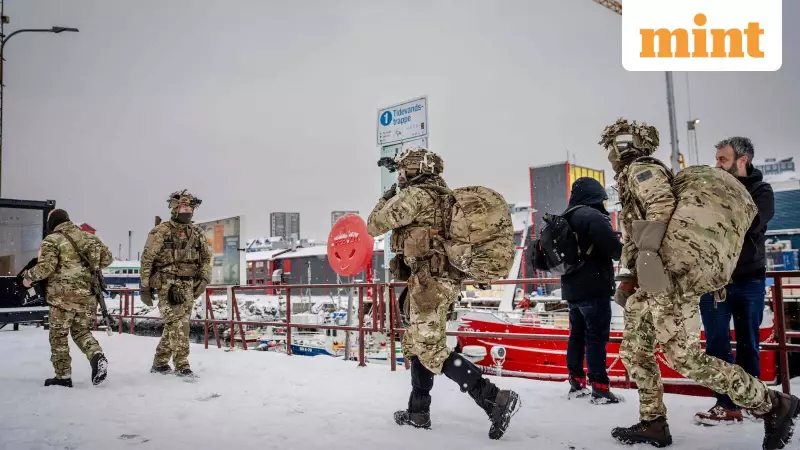
Denmark invited allies for exercises and informed NATO. "Exercises like the one Denmark is undertaking bolster our collective defenses there," said U.S. Army Colonel Martin O'Donnell, spokesman for NATO's military command.
Governments including the U.K., France, and Germany frame deployments as showing NATO's commitment to defend Greenland against rivals like Russia. Trump claims their purpose is unknown.
He warned of a "very dangerous situation" and imposed tariffs starting at 10% on February 1, rising to 25% in June, unless a deal is reached for "the Complete and Total purchase of Greenland."
European Resolve and NATO's Future
Denmark says the U.S. can increase its military presence in Greenland and seeks talks on cooperation. But Copenhagen and Greenland's government insist the island is not for sale.
Danish Prime Minister Mette Frederiksen warns that a forcible U.S. annexation would end NATO. Europe's major countries back Denmark, stating only Danes and Greenlanders can decide Greenland's future.
NATO survived past crises like the 1956 Suez dispute and the 2003 Iraq invasion. "But this feels like a very dangerous moment," Lungescu noted. "One we haven't seen before." The alliance now navigates its most severe test since World War II, with global stability hanging in the balance.