Trump's Bold Claim: Seeks Influence in Iran's Leadership Succession
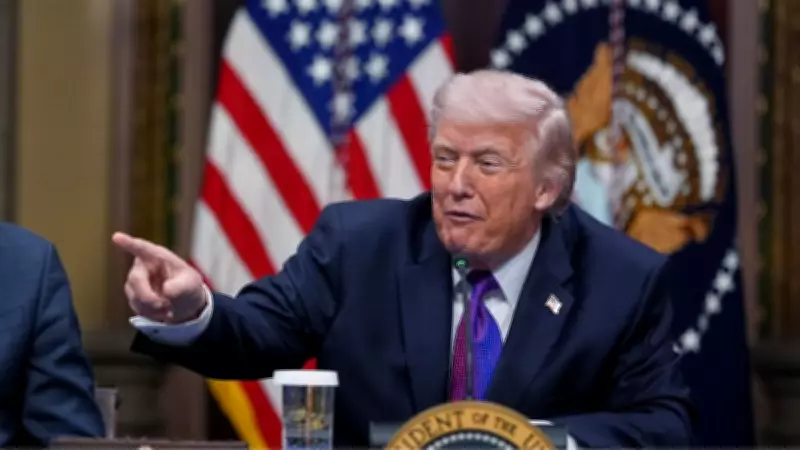
In a provocative statement that has reverberated across global diplomatic circles, former United States President Donald Trump has openly declared his intention to play a role in the selection of Iran's next Supreme Leader. This unprecedented move comes as he explicitly labeled the potential candidacy of Mojtaba Khamenei, the son of the current Supreme Leader Ayatollah Ali Khamenei, as "unacceptable." The remarks, made during a recent public appearance, have ignited fierce debates about foreign interference and the future of US-Iran relations.
Background: Iran's Leadership and the Khamenei Dynasty
Iran operates under a unique political system where the Supreme Leader holds ultimate authority, overseeing the country's military, judiciary, and media. Ayatollah Ali Khamenei, who has held this position since 1989, is now 84 years old, leading to widespread speculation about his successor. Traditionally, the Assembly of Experts, an elected body of Islamic scholars, is responsible for appointing the next Supreme Leader. However, discussions have surfaced regarding Mojtaba Khamenei, a mid-ranking cleric and the son of the current leader, as a possible contender, though he has no official designation as heir.
Trump's Unprecedented Intervention
Donald Trump, known for his confrontational foreign policy during his presidency from 2017 to 2021, has broken new ground by asserting that he wants to be "involved" in the process of picking Iran's next Supreme Leader. He argued that allowing Mojtaba Khamenei to assume power would be detrimental, citing concerns over continuity of policies he views as hostile. Trump emphasized, "We cannot have someone like that in charge; it's unacceptable for regional stability and global security." This stance marks a significant escalation in his ongoing criticism of Iran, which included withdrawing from the Iran nuclear deal and imposing severe sanctions.
International Reactions and ImplicationsThe international community has responded with a mix of alarm and skepticism. Iranian officials have vehemently rejected Trump's comments, with a spokesperson for the Foreign Ministry stating, "Iran's internal affairs are not subject to foreign dictates, especially from a former US president known for his adversarial stance." Analysts suggest that such statements could further strain already tense US-Iran relations, potentially impacting nuclear negotiations and regional dynamics in the Middle East. Critics argue that Trump's involvement could undermine diplomatic efforts and fuel anti-American sentiment in Iran.
Historical Context and Future Scenarios
Historically, the United States has sought to influence Iranian politics, notably during the 1953 coup, but direct involvement in selecting a Supreme Leader would be unprecedented. Experts note that while Trump's influence as a private citizen is limited, his statements could sway public opinion and political discourse in both countries. Looking ahead, the succession process in Iran remains opaque, with factors such as clerical support, political alliances, and public sentiment playing crucial roles. Trump's intervention adds a new layer of complexity, potentially affecting how Iran navigates this critical transition.
Conclusion: A Diplomatic FlashpointDonald Trump's call to be involved in choosing Iran's next Supreme Leader, coupled with his dismissal of Mojtaba Khamenei, has created a diplomatic flashpoint. As Iran prepares for a leadership change, this controversy highlights the enduring tensions between the two nations and raises questions about the boundaries of foreign influence in sovereign affairs. The situation warrants close monitoring as developments unfold in the coming years.