President Donald Trump has sparked controversy by threatening to invoke the Insurrection Act of 1807 in response to ongoing protests in Minneapolis. This move comes just a week after a tragic incident where Renee Good, a 37-year-old mother of two, was fatally shot in her car by an Immigration and Customs Enforcement official.
Trump's Social Media Post and Threats
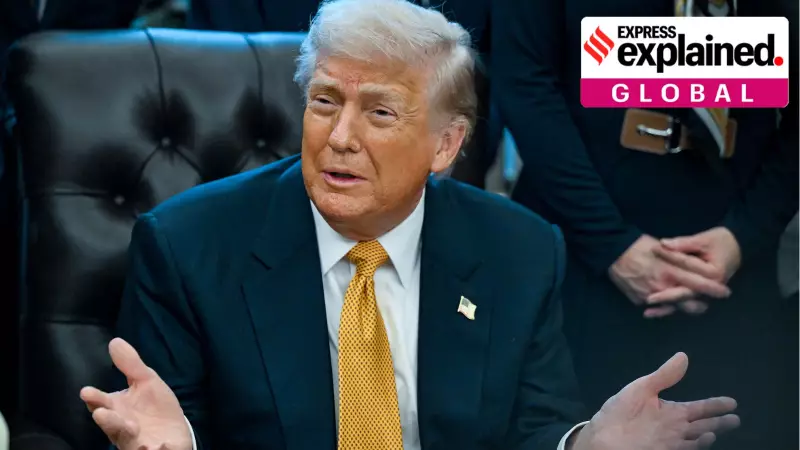
In a recent social media post, Trump issued a stark warning. He stated that if Minnesota politicians fail to control what he called "professional agitators and insurrectionists," he would institute the Insurrection Act. Trump emphasized that this law has been used by previous presidents to quickly end disturbances.
The president has consistently suggested invoking this act during both his terms. He argues that some parts of the United States cannot be managed by local law enforcement alone. Trump has made it clear that he is willing to override local authorities and deploy troops if necessary to quell protests.

Background of Federal Actions
This threat aligns with a broader escalation in federal measures targeting illegal immigration. Trump has also threatened to cut federal funding to sanctuary cities like Minneapolis starting February 1. Sanctuary cities are those that limit cooperation with federal immigration officers.
Additionally, the Department of Homeland Security announced it will indefinitely halt visa processing for individuals from 75 countries from January 21. This action targets people the administration views as potential "public charges" who might rely on public benefits.
What Is the Insurrection Act?
The Insurrection Act was signed into law by Thomas Jefferson in 1807. It comprises various laws and amendments enacted between 1792 and 1871. This act grants the U.S. president the authority to deploy the military or federalize National Guard troops to enforce laws.
It can be invoked when there are "unlawful obstructions, combinations, or assemblages, or rebellion" that make it impossible to enforce U.S. law through normal judicial processes. Troops may be deployed to quell rebellion or large-scale violence based on specific criteria, such as at the request of a state's governor or legislature.
Historical Use of the Act
The act has been used sparingly throughout American history, typically in cases of massive unrest where local law enforcement is overwhelmed. It was last invoked in 1992 by President George W. Bush during the Los Angeles protests after the Rodney King verdict.
Historically, the act has served to protect individual rights in critical moments. For example, Abraham Lincoln used it during the Civil War to suppress rebellion by southern states. Ulysses Grant invoked it to combat racist violence by the Ku Klux Klan after the war.
Dwight Eisenhower employed the act in Arkansas to enforce federal desegregation orders. Other presidents, like Grover Cleveland and Woodrow Wilson, used it during labor strikes and to protect minority groups from violence.
Why Trump Wants to Use the Act
Since returning to the White House, Trump has pursued an aggressive crackdown on immigration. On his first day back, he requested recommendations on invoking the Insurrection Act to gain control of the southern border.
Faced with widespread protests against National Guard deployments, Trump has repeatedly mooted using the act. In October, he told reporters that he is "allowed" to use it if courts block his efforts, stating, "We can always use the Insurrection Act if we want."
During his current term, Trump has increased funding for ICE under the One Big Beautiful Bill Act. This has empowered ICE agents to detain and shoot individuals suspected of being illegal immigrants at will. Recently, 2,000 ICE officers were deployed to Minneapolis and surrounding areas.
Current Situation in Minneapolis
Protests have continued in Minnesota following Good's death, with demonstrators opposing alleged high-handed behavior by ICE agents. Despite their mandate to de-escalate confrontations, these agents often operate in military-style camouflage gear, masked and armed, patrolling residential neighborhoods.

The suggested use of the Insurrection Act, if it withstands legal challenges, represents a significant federal intervention. It highlights the ongoing tensions between federal authority and local governance in addressing civil unrest and immigration policies.