Terror-Links Case: Pakistan-Based Handlers Exposed in Online Radicalization Network
Fresh and alarming revelations have emerged in the ongoing terror-links case centered in Amaravati, pointing directly to suspected connections with Pakistan-based handlers. This development has raised profound and serious security concerns across the nation. During intensive and sustained interrogation sessions, the accused individuals reportedly disclosed that members linked directly to Pakistan were integral parts of a sophisticated online network that meticulously guided their extremist activities.
Probe Uncovers Radicalization Through Social Media
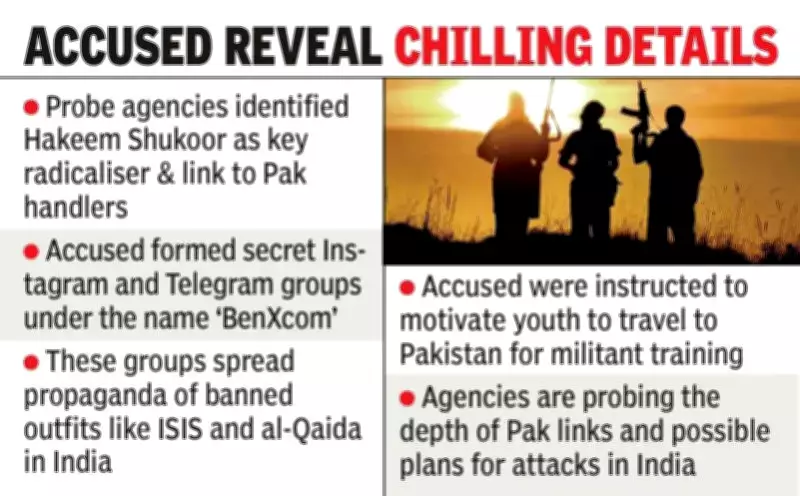
The comprehensive investigation, spearheaded by the Counter Intelligence Cell in close collaboration with the National Investigation Agency (NIA) and other critical intelligence agencies, has uncovered a disturbing pattern of radicalization. The accused were systematically radicalized through various social media platforms by a key figure identified as Al Hakeem Shukoor. Investigators believe Shukoor acts as a crucial link between the local accused individuals and their foreign handlers based in Pakistan, orchestrating the flow of instructions and propaganda.
Details of the Accused and Their Custody
The five accused individuals—Mohammed Rahantullah Sharif, Mohammed Danish, Mirza Sohail Baig, Saida Begum, and Abdul Salam—completed their mandatory five-day police custody on Sunday. During this critical period, interrogators successfully extracted crucial and detailed information about their operations and connections. Officials confirmed that the custody period was highly productive in unraveling the network's structure.

Secret Online Groups and Propaganda Activities
Authorities revealed that the accused formed secret and encrypted groups on popular platforms like Instagram and Telegram, operating under the covert name "BenXcom". Through these groups, they maintained constant and clandestine communication with extremist elements. Their alleged activities included actively spreading the propaganda of internationally banned terrorist organizations such as ISIS and al-Qaida in the Indian subcontinent region. Simultaneously, they were engaged in systematic attempts to radicalize vulnerable youth across the country.
Instructions for Jihad and Training
Investigators stated that the accused received explicit instructions from their handlers to motivate and recruit young individuals to join jihad. This included plans for them to travel to Pakistan and Afghanistan for specialized militant training programs. The accused reportedly posted extensive anti-national content online, glorified various extremist outfits, and promoted a violent radical ideology strictly under the directions of Al Hakeem Shukoor, who acted as their primary conduit to foreign operatives.
Ongoing Investigation and Future Steps
Intelligence agencies are now intensively probing the full extent of the Pakistan links and assessing whether concrete plans existed to carry out terrorist attacks within India. With the initial custody period now concluded, officials are likely to seek further judicial permission for extended interrogation. The primary objectives are to completely uncover the wider network's reach, identify all collaborators, and implement strategies to neutralize any potential threats to national security. This case underscores the evolving challenges of online radicalization and cross-border terrorism networks.