Telangana Migrants in Israel Grapple with Unprecedented Fear Amid Iran Conflict
Migrant workers from Telangana residing in Israel have endured numerous security alerts over recent years, often dashing into bomb shelters as a precautionary measure. However, the latest escalation involving Iran has left them deeply unnerved, creating an edgy atmosphere unlike anything they have previously experienced, even as familiar sirens wail and alerts circulate on social media from Israeli authorities.
Demographics and Employment of Telugu Workers in Israel
According to the Israel Telangana Association (ITA), approximately 7,000 individuals from the Telugu states currently live in Israel. This includes about 2,000 from Telangana, with the remainder hailing from Andhra Pradesh. A significant portion of the Telangana contingent originates from districts such as Nizamabad, Rajanna Sircilla, and Jagtial.
Most of these migrants are employed as professional caregivers or construction workers, earning monthly wages between 6,000 and 6,500 shekels, which translates to roughly ₹1.35 lakh to ₹1.50 lakh. Under a bilateral framework agreement established in 2022, over 20,000 Indians are now working in Israel's construction sector, with 6,700 arriving in 2025 to address labor shortages following the Gaza conflict. Their roles primarily involve scaffolding, iron bending, and tiling.
Additionally, between 18,000 and 20,000 Indians serve as caregivers, responding to Israel's growing elderly population. Many Telangana natives reside in Ramat Gan and surrounding neighborhoods near Tel Aviv, while a smaller group lives in Ashkelon, located about 60 kilometers away.
Heightened Tensions and Personal Accounts
Soma Ravi, former president of the ITA and a native of Nizamabad, described the weekend atmosphere as intensely tense, with residents exercising far greater caution than in past conflicts. Having lived in Ramat Gan for nearly two decades, Ravi reported that a missile landed just a couple of kilometers from his residence on Saturday evening.
"Earlier escalations typically involved militant groups like Hezbollah and Hamas. This time, it's a powerful nation like Iran launching ballistic missiles, so people are more worried and extra careful," he explained. Ravi, who was scheduled to fly to the United States on Tuesday for his daughter's wedding on March 15, is now stranded due to the closure of airspace.
Residents noted that essential services such as supermarkets and pharmacies remain operational, while offices, schools, and shopping malls are closed. Outdoor gatherings are restricted to 30 people, and most bunkers can accommodate between 50 and 60 individuals.
Challenges Faced by Workers and Families
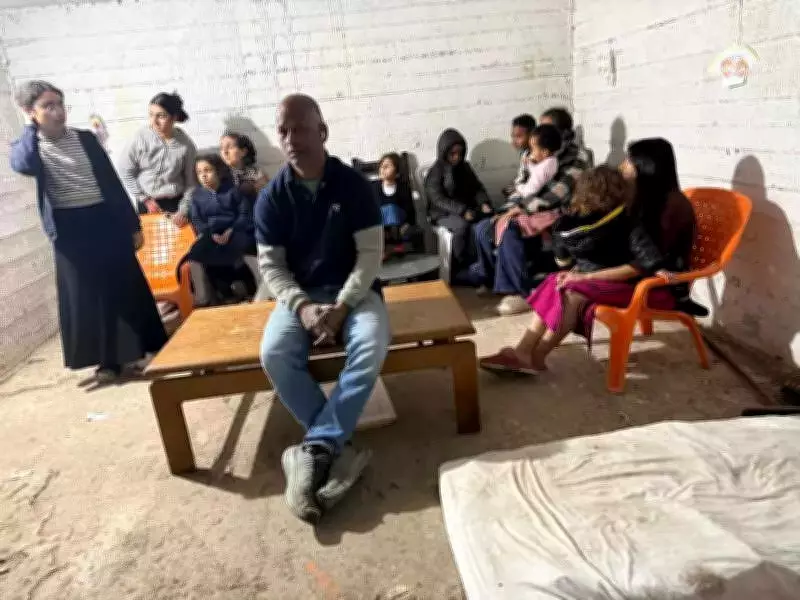
Gattu Naveen, a construction worker from Nizamabad who has lived in Petah Tikva near Tel Aviv for two years, detailed the immediate response to missile alerts. "As soon as a missile is launched, the siren goes off, and we are instructed to move to bunkers immediately. Separate local alarms also ring. For families with children, the elderly, and pregnant women, repeatedly moving back and forth can be particularly challenging," he said.
Elle Prasad, a native of Rajanna Sircilla who has worked in Ashkelon for 18 years, mentioned that while residents anticipated rising tensions, they did not expect the situation to escalate so rapidly. "Vehicle movement is limited, and people are stepping out only for essential work," he added. Residents are maintaining regular contact with the Indian embassy, which has advised them to remain vigilant and exercise caution.
Broader Context and Impact
The current conflict marks a significant shift from previous security challenges, as it involves state-level aggression rather than non-state actors. This has amplified fears among the migrant community, who rely on these jobs for their livelihoods but now face increased risks. The disruption of travel plans, like Ravi's, underscores the broader impact on personal lives and family events.
Despite the dangers, the workers continue their daily routines as much as possible, balancing the need for income with safety concerns. Their experiences highlight the vulnerabilities of migrant labor in conflict zones and the importance of diplomatic support from their home country.