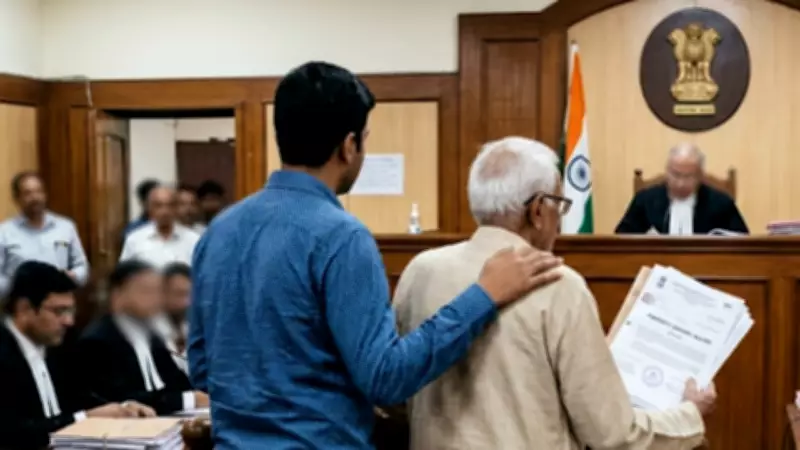
Telangana High Court Delivers Landmark Ruling on Senior Citizens Act Powers
In a significant judicial pronouncement that clarifies the boundaries of administrative authority under the Maintenance and Welfare of Parents and Senior Citizens Act, 2007, the Telangana High Court has overturned orders that had invalidated a property gift from a grandfather to his grandson. The division bench, comprising Chief Justice Aparesh Kumar Singh and Justice GM Mohiuddin, declared that the proceedings leading to the cancellation of the registered gift deed were conducted without proper statutory authority and therefore legally unsustainable.
Property Dispute Origins and Family Settlement
The legal controversy centered on a registered gift deed executed on April 6, 2018, concerning a residential property situated in Kothapet village within Medchal-Malkajgiri district. The property, constructed on a 247-square-yard plot, had been formally transferred by a 90-year-old grandfather to his grandson through this documented arrangement.
According to court records, this property transfer followed a comprehensive family settlement involving the grandson's paternal uncle. As part of this familial agreement, the appellant grandson reportedly paid ₹10 lakh to resolve his uncle's share in the property. Following the legal transfer, the grandson demolished the existing structure and invested approximately ₹4 crore through loans to construct a G+2 building on the site.
Legal Proceedings and Administrative Actions
The dispute emerged when the elderly grandfather approached authorities alleging that the gift deed had been executed with the understanding that his grandson would provide care and maintenance. Claiming this commitment had not been honored, the senior citizen sought cancellation of the property transfer under provisions of the senior citizens welfare legislation.
The matter initially reached the Revenue Divisional Officer of Keesara division, who dismissed the application in December 2022, noting the dispute was civil in nature and should be resolved through civil court proceedings. The grandfather subsequently appealed before the district collector, who serves as the appellate authority under the statute.
In July 2023, the district collector upheld the validity of the gift deed, observing that it had been properly registered and that no convincing evidence indicated the donor had acted under pressure or lacked understanding of the transaction. The collector specifically noted the deed contained no explicit maintenance clause.
Despite this favorable ruling, the grandfather later approached the commissioner of the department for maintenance and welfare of parents, senior citizens and transgender persons seeking review of the decision. The commissioner condoned procedural delays and remanded the matter to the district collector, after which the additional district collector passed an order in April 2025 cancelling the gift deed.
Judicial Analysis and Statutory Interpretation
The appellant grandson challenged this cancellation before the high court, arguing that the commissioner possessed no statutory authority to entertain what effectively constituted a second appeal under the senior citizens welfare law. The appellant maintained that the statutory framework establishes only a limited two-tier mechanism: an initial determination by the tribunal and a single appeal before the appellate tribunal, typically the district collector.
The division bench conducted a thorough examination of the statutory framework, focusing specifically on whether the commissioner had legitimate authority to entertain a second appeal or review after the district collector had already adjudicated the matter. The court noted that the legislation establishes a clear two-tier structure: a tribunal as primary authority and an appellate tribunal for appeals, with no provision for further appeal or review before the commissioner.
The bench consequently held that the commissioner's decision to condone delays and remand the matter to the district collector lacked statutory foundation. All subsequent proceedings, including the cancellation of the gift deed by the additional district collector, therefore suffered from fundamental legal infirmities.
Essential Elements of Valid Property Transfer
The court emphasized that the essential elements required for a valid gift—voluntary execution, acceptance by the donee, and proper registration—had been satisfactorily established in this case. The judicial analysis further noted that appellate interference with factual findings remains limited when those findings receive adequate evidentiary support.
The respondents, supporting the cancellation proceedings, had argued that the gift deed was not executed voluntarily and was obtained under suspicious circumstances. The grandfather maintained that the transfer occurred with the understanding that his grandson would provide care and maintenance, and when this expectation allegedly went unfulfilled, he sought relief under provisions allowing property transfers to be declared void if transferees fail to maintain senior citizens.
Legal Significance and Procedural Safeguards
This judgment provides crucial clarification regarding the scope of authority under the senior citizens welfare legislation and reiterates that statutory bodies must operate strictly within powers granted by legislation. By determining that the commissioner lacked jurisdiction to entertain a second appeal, the court reinforced the fundamental principle that quasi-judicial authorities cannot assume powers not expressly provided by statute.
The ruling additionally underscores the legal sanctity of registered gift deeds once they have been properly executed, accepted, and recorded, unless compelling evidence emerges to invalidate them. This decision strengthens procedural safeguards in cases involving cancellation of property transfers while simultaneously highlighting that although the law offers protection to senior citizens facing neglect, its provisions must be applied within established legislative boundaries.
Final Judicial Determination and Key Takeaways
Allowing the writ appeals, the division bench set aside all orders that had led to cancellation of the gift deed. The court declared that proceedings initiated after the district collector's earlier decision lacked statutory authority and were therefore void. Consequently, the validity of the 2018 gift deed executed in favor of the appellant grandson was fully restored.
Key legal principles established through this judgment include:
- The senior citizens welfare law provides only a two-tier mechanism—a tribunal and one appellate authority
- The commissioner cannot entertain second appeals or reviews unless expressly permitted by statute
- Registered gift deeds carry significant legal sanctity once properly executed, accepted, and registered
- Authorities exercising quasi-judicial powers must operate strictly within legal frameworks
- Orders issued without proper statutory jurisdiction can be declared void by competent courts
This ruling delivers important clarity regarding limits of administrative powers under the senior citizens welfare legislation, particularly in disputes involving property transfers executed by elderly individuals. By emphasizing that authorities cannot exceed powers granted by statute, the judgment reinforces procedural protections while acknowledging the legislation's protective purpose for vulnerable senior citizens.