In a revelation that could escalate political tensions in Bangladesh, a prominent journalist has claimed that exiled opposition leader Tarique Rahman is determined to seek the extradition of current Prime Minister Sheikh Hasina. This move is reportedly contingent on his Bangladesh Nationalist Party (BNP) returning to power.
Journalist's Explosive Claim on Political Vendetta
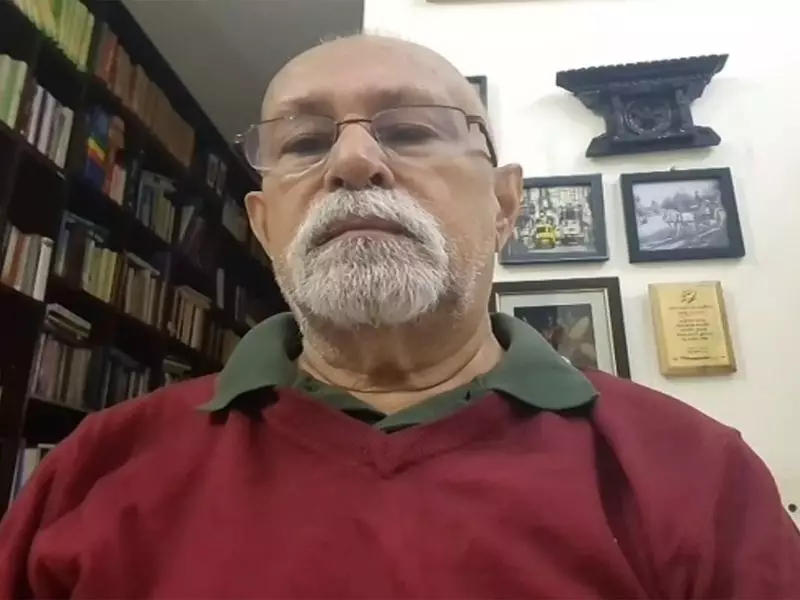
Bangladeshi journalist Selaam Samad, based in Washington DC, made this significant disclosure during an interview. He stated that Tarique Rahman, the acting chairman of the BNP, has explicitly stated his intention to "definitely ask for the extradition" of Sheikh Hasina. Samad, who is the Washington correspondent for Bangladesh's leading daily Prothom Alo, suggested this is part of a long-standing and bitter political rivalry.
The roots of this animosity trace back to the political turmoil of 2007-2008. During the military-backed caretaker government, both Sheikh Hasina and her rival Khaleda Zia, the BNP chairperson and Tarique's mother, were imprisoned on corruption charges. Tarique Rahman himself was arrested and later, in 2008, was sentenced to seven years in prison for a money laundering case. He has been living in exile in London since 2008, following his release on parole for medical treatment.
The Legal and Diplomatic Pathway for Extradition
The prospect of seeking an extradition raises complex international legal questions. Selaam Samad indicated that Rahman's strategy would involve leveraging the legal systems of countries where the current Bangladeshi Prime Minister might travel. The implication is that if the BNP forms a government, it could initiate legal proceedings abroad to seek Hasina's extradition on charges that the party believes are legitimate.
This claim underscores the deep-seated nature of the conflict between Bangladesh's two major political dynasties. The Awami League, led by Sheikh Hasina, and the BNP, led by the Zia family, have dominated the country's politics for decades. Their rivalry has often been marked by allegations of corruption, violence, and vendetta politics.
Implications for Bangladesh's Political Future
Samad's revelation is not just a statement of intent but a potential blueprint for political retribution. It signals that the BNP's return to power could lead to unprecedented legal and diplomatic battles targeting the incumbent leadership. This threat adds another layer of intensity to Bangladesh's already polarized political landscape, where elections are frequently contested and opposition parties often allege state repression.
The journalist's comments bring to the forefront the personal and political grievances that continue to fuel the nation's governance crisis. For Tarique Rahman, who faces multiple convictions and life sentences in absentia in Bangladesh, the pursuit of Hasina's extradition could be framed as an act of political and legal parity.
As Bangladesh navigates its challenging democratic journey, such declarations promise to keep the political temperature high, with stability and reconciliation appearing as distant goals. The international community, particularly nations with extradition treaties, may soon find themselves entangled in this protracted domestic political feud.