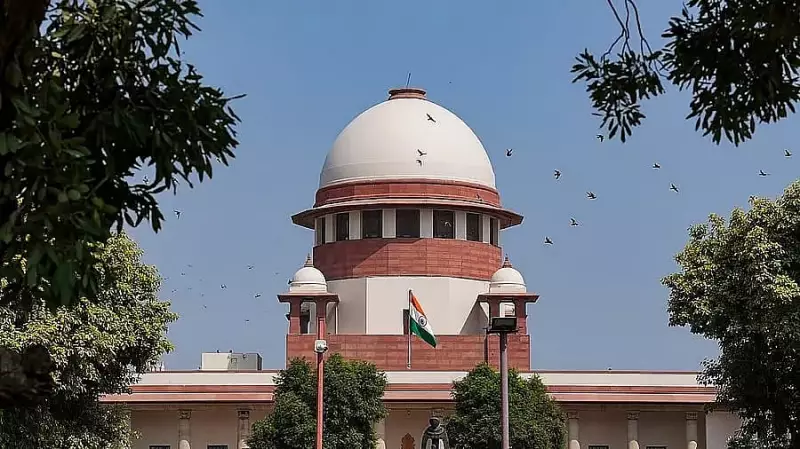
In a significant move aimed at tackling the capital's persistent air quality crisis, the Supreme Court of India has issued directives to the National Highways Authority of India (NHAI) and the Municipal Corporation of Delhi (MCD). The apex court has asked both authorities to actively consider the possibility of either shifting or completely closing down nine key toll plazas situated at the borders of Delhi.
Court's Directive for Smoother Traffic and Cleaner Air
The bench, expressing concern over the contribution of vehicular congestion to pollution, specifically instructed the MCD to take a concrete decision on this matter within a strict deadline of one week. The core objective behind this directive is twofold: to facilitate significantly smoother traffic flow at these critical entry and exit points and to achieve a tangible reduction in tailpipe emissions from idling and slow-moving vehicles.
The court's order, delivered on 17 December 2025, suggests that the temporary shutdown of these toll collection points could serve as an immediate intervention. The justices emphasized the urgency of the situation, linking the long queues at toll plazas directly to increased emission levels in the National Capital Region (NCR).
Focus on Immediate Action and Implementation
The directive places a particular onus on the Municipal Corporation of Delhi (MCD), tasking it with evaluating the logistical and operational feasibility of the proposed measure. The one-week deadline for the MCD's decision underscores the court's view of this as a pressing public health issue requiring prompt administrative action.
While the National Highways Authority of India (NHAI) has also been asked to collaborate on the plan, the immediate responsibility for an initial decision rests with the civic body. The court's intervention highlights the ongoing legal scrutiny of executive actions, or the lack thereof, in combating the dangerous air pollution levels that plague Delhi, especially during the winter months.
Potential Impact and Broader Context
If implemented, the shifting or closure of these nine toll plazas could lead to several immediate outcomes:
- Reduced vehicular congestion at Delhi's borders, leading to shorter travel times.
- A direct decrease in vehicular emissions from cars and trucks no longer forced to idle for extended periods.
- A potential model for other pollution hotspots where infrastructure contributes to traffic snarls.
This order is the latest in a series of judicial interventions concerning Delhi's air quality. The Supreme Court has consistently monitored the issue, directing various state and central agencies to implement effective measures. The focus on toll plazas marks a specific targeting of a known point source of congestion and pollution, moving beyond broader, more generalized directives.
The coming week will be crucial as the MDC deliberates and presents its decision to the court. The move is seen as a test of inter-agency coordination and the willingness of authorities to adopt unconventional, if temporary, solutions to a complex and severe environmental challenge.