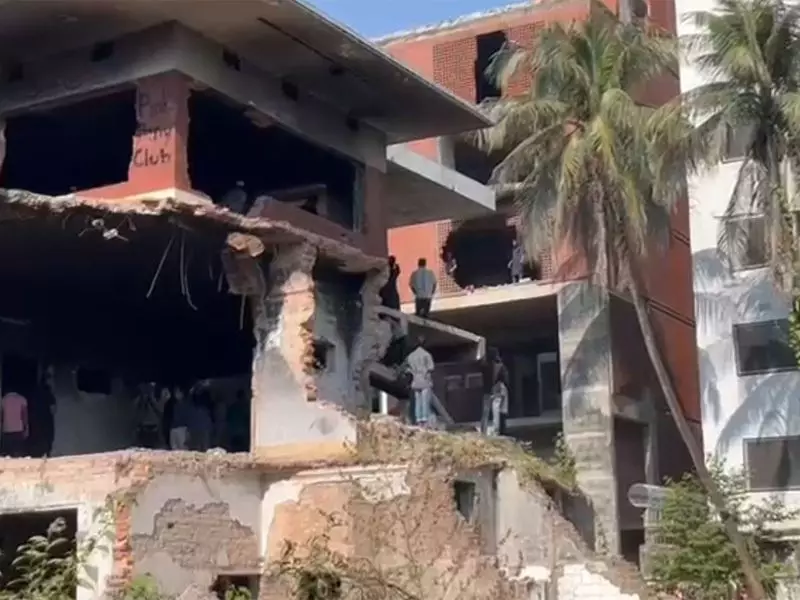
Political tensions in Bangladesh have reached a new flashpoint as violent protests continue to grip the capital city of Dhaka. The unrest took a deeply symbolic turn when the partially demolished ancestral house of the nation's founding father, Sheikh Mujibur Rahman, was vandalised by unidentified assailants.
Symbolic Target in a City on Edge
The incident occurred in the early hours of a tense Friday morning at the historic residence located in the capital's Tungipara area. According to police reports and local sources, a group of individuals forcefully entered the premises of the house, which is currently undergoing demolition for a government-led reconstruction project. The vandals proceeded to smash windows and damage parts of the structure, an act seen as a direct assault on the legacy of Bangabandhu, the revered leader of Bangladesh's independence movement.
This act of vandalism against a site of immense national significance has further inflamed an already volatile political atmosphere. The property, officially known as the Sheikh Mujib Ancestral Home, holds profound emotional and historical value for supporters of the ruling Awami League and many citizens across the country.

A Backdrop of Widespread Political Unrest
The vandalism is not an isolated event but a symptom of the broader, escalating conflict between the government and opposition forces. For weeks, Dhaka and other parts of Bangladesh have been scenes of frequent clashes, strikes (hartals), and blockades organised by the main opposition party, the Bangladesh Nationalist Party (BNP), and its allies.
The core of the dispute lies in the upcoming national elections. The opposition coalition is demanding the resignation of Prime Minister Sheikh Hasina—Sheikh Mujibur Rahman's daughter—and the establishment of a neutral caretaker government to oversee the polls. They allege that without this, free and fair elections are impossible under the current Awami League administration. The government has firmly rejected these demands, labelling the protests as attempts to destabilise the nation.
The ongoing protests have led to:
- Severe disruptions to daily life, transportation, and commerce.
- Numerous incidents of violence between protestors, law enforcement, and ruling party activists.
- Reports of casualties and arrests on both sides, though official numbers are contested.
- A palpable climate of fear and uncertainty among the general public.
Reactions and the Path Forward
The desecration of Sheikh Mujib's home has triggered a wave of condemnation. Leaders of the Awami League have denounced the act as "unforgivable" and "anti-state," accusing opposition elements of crossing a sacred line. They have linked the vandalism directly to the opposition's campaign of agitation, framing it as an attack on the nation's founding principles.
Conversely, the BNP and its allies have largely distanced themselves from the specific incident, focusing their rhetoric on the government's alleged authoritarian tactics and the need for electoral reform. They maintain that the widespread public discontent is a natural response to governance issues.
Security has been significantly tightened around key political landmarks and government buildings across Dhaka following the incident. Authorities have launched an investigation to identify and apprehend those responsible for the vandalism. However, with political rhetoric intensifying and street protests showing no signs of abating, the situation remains precarious.
Analysts warn that the targeting of a monument so central to the national identity risks hardening positions on both sides, making a political dialogue and peaceful resolution even more challenging to achieve. The eyes of the international community are now closely watching how Bangladesh navigates this period of profound internal strife.