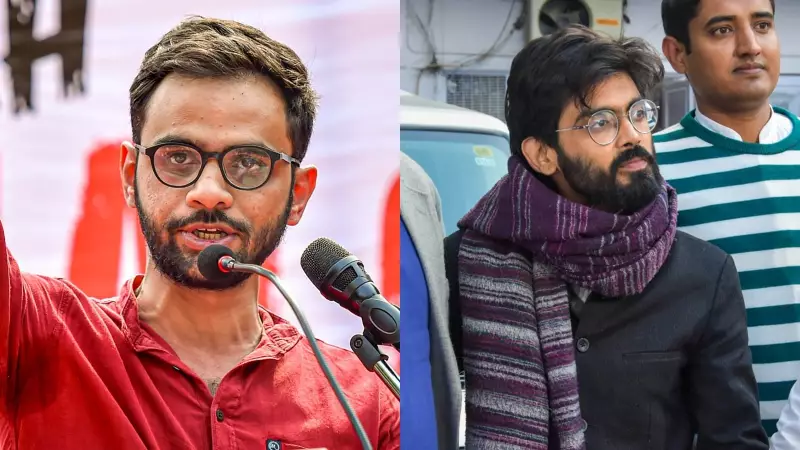
In a significant development in the ongoing legal proceedings related to the 2020 Northeast Delhi riots, accused and former JNU student Sharjeel Imam argued before a Delhi court on Thursday that his speeches bore no connection to the violence that erupted during the anti-CAA protests. The riots had resulted in the deaths of 53 people.
Defence Argues No Causal Link to Violence
Representing Imam, lawyers Talib Mustafa and Ahmad Ibrahim contended before the court that their client's speeches did not disturb public order or incite the February 2020 violence. Imam is charged under the stringent Unlawful Activities (Prevention) Act (UAPA) and has been named a "mastermind" by the Delhi Police Special Cell.
"I gave multiple speeches in Bihar and Bengal, but public order didn't get disturbed there," the defence argued, as per the proceedings. They emphasized that the prosecution's primary evidence is Imam's speech from December 13, 2019, but the violence occurred much later in February 2020. "Violence didn't happen on that day… there's no link," Mustafa stated.

Denial of Conspiracy with Umar Khalid
In a key assertion, the defence also sought to dismantle the alleged conspiracy narrative. Mustafa told the court that during his five-year tenure at Jawaharlal Nehru University, Sharjeel Imam never spoke to fellow accused and former JNU student Umar Khalid.
"I don't know what coordination they are talking about. To establish a conspiracy, it is necessary to show the agreement between us but they have failed to show any agreement," Mustafa argued. Both Khalid and Imam have been denied bail, with the Supreme Court recently categorizing their roles as more severe.
Supreme Court's 'Architect' vs 'Facilitator' Framework
The arguments come just days after a pivotal order from the Supreme Court. On Monday, the apex court established a legal hierarchy between "architects" and "facilitators" of the alleged conspiracy while considering bail pleas.
Applying this distinction, the court granted bail to five accused deemed "facilitators," but rejected the bail applications of Umar Khalid and Sharjeel Imam, implying their alleged roles were more central. Of the 18 individuals originally arrested in this larger conspiracy case, 11 have now been granted bail.
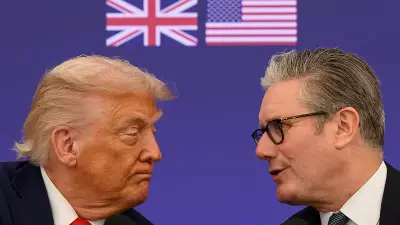
The police case alleges that the riots were the outcome of a "deep-rooted conspiracy" planned after the Cabinet approved the Citizenship (Amendment) Act in December 2019. The conspiracy purportedly involved setting up 23 round-the-clock protest sites in Muslim-majority areas. The police claim the accused aimed to escalate protests to a 'chakka jam' during the 2020 visit of then-US President Donald Trump.
Countering these allegations, Imam pointed out, "Trump visited in February… I was in jail at that time. I can't do anything from inside jail." His defence maintained that none of the acts attributed to him fall under the UAPA's provisions.
With the Supreme Court's order creating a clear demarcation between participants and masterminds, the five remaining jailed accused are expected to seek bail soon. For Khalid and Imam, the legal path to bail remains longer; they can re-apply only after protected witnesses are examined or after one year, whichever is earlier.