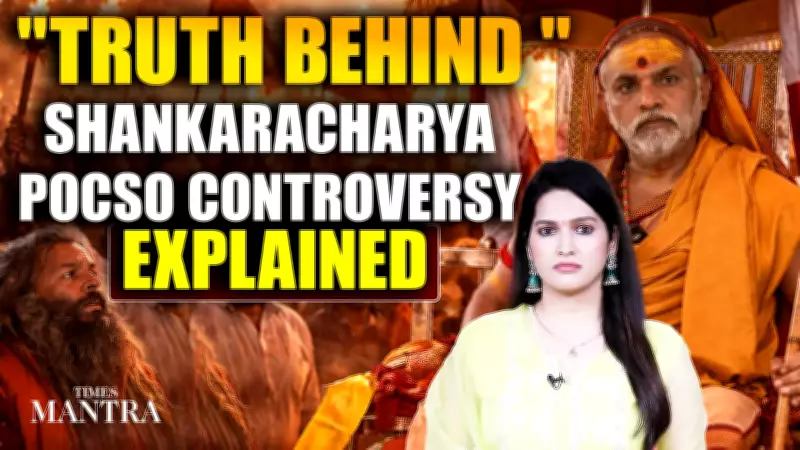
Shankaracharya Avimukteshwaranand Booked Under POCSO Act: A Nationwide Debate on Faith and Law
The religious landscape of India has been jolted by a significant legal development as Swami Avimukteshwaranand Saraswati, a prominent Shankaracharya, finds himself embroiled in a serious controversy. Following a court-directed FIR registered under the stringent Protection of Children from Sexual Offences (POCSO) Act, the nation is now grappling with profound questions about faith, accountability, and the unwavering rule of law.
The Allegations and Denials: A Clash of Narratives
Serious allegations have emerged against the spiritual leader, though specific details of the charges remain under legal scrutiny. In a swift and forceful response, Swami Avimukteshwaranand has categorically denied all accusations, labeling them as a deep-rooted conspiracy aimed at tarnishing his reputation and, by extension, the religious institutions he represents. This stark contrast between the legal charges and the seer's defense has set the stage for a highly polarized public discourse.
Legal Framework and Due Process: The Core of the Controversy
At the heart of this unfolding drama lies the critical examination of legal due process. The case, initiated by a court order, underscores the judiciary's role in addressing allegations irrespective of the accused's social or religious stature. Legal experts emphasize that the POCSO Act is a zero-tolerance legislation designed to protect minors, and its invocation in this instance highlights the gravity of the claims being investigated. The proceedings will now follow established legal protocols, ensuring a thorough investigation before any conclusions are drawn.
Broader Implications: Is Sanatan Dharma Under Scrutiny?
The controversy has inevitably spilled over into a larger, more sensitive debate: can allegations against an individual religious figure be equated with an attack on an entire spiritual tradition? Many devotees and supporters view the legal action as a targeted assault on Sanatan Dharma and its leadership, potentially undermining public faith. Conversely, advocates for legal accountability argue that no individual is above the law, and that subjecting spiritual leaders to the same legal standards reinforces a just and equitable society.
This tension frames a central question for modern India: how does a society balance deep-seated religious devotion with the imperative of legal due process? Is this episode primarily a matter of faith being placed under an uncomfortable microscope, or is it simply a demonstration of the law taking its independent course, blind to status and belief?
Public Discourse and National Reaction
The case has ignited a fiery nationwide debate across media platforms, social networks, and public forums. Key points of discussion include:
- The integrity and timing of the allegations.
- The potential for misuse of legal frameworks for personal or political vendettas.
- The responsibility of spiritual institutions in ensuring transparency and accountability.
- The psychological and social impact on the community of devotees.
This incident serves as a pivotal moment, forcing a collective introspection on the intersection of spirituality, leadership, and legal responsibility in contemporary India. The outcome of this legal battle will likely have lasting repercussions on public perception, the autonomy of religious institutions, and the enduring principle that justice must be served without fear or favor.