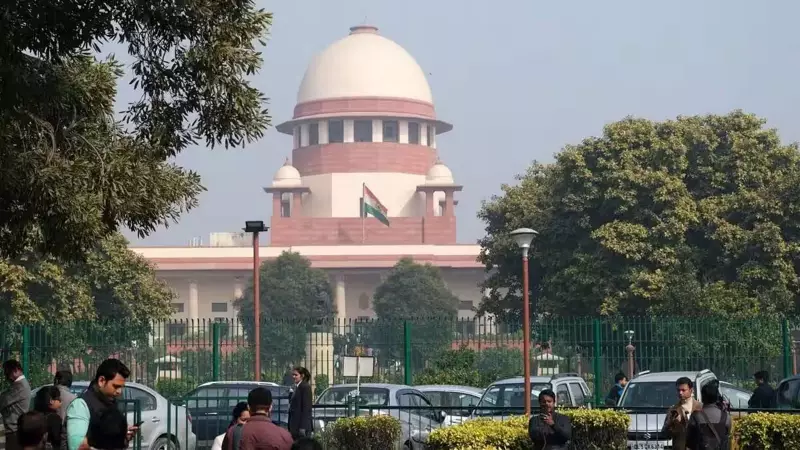
The Supreme Court has firmly upheld a Gujarat High Court decision that threw out an FIR filed under the Gujarat Disturbed Areas Act. This case centered on a contentious land dispute in Ahmedabad's Sarkhej area.
Court Rejects Challenge to High Court Ruling
On January 9, a Supreme Court bench comprising Justice Pamidighantam Sri Narasimha and Justice Alok Aradhe dismissed a Special Leave Petition. The petition was filed by complainant Pranav Harish Sheth. He sought to challenge the Gujarat High Court's August 2025 order that quashed the FIR against businessman Ahmad Allarakha Patel.
The Supreme Court stated clearly it saw no reason to interfere with the High Court's judgment. This decision brings a significant legal closure to a long-running property conflict.
Roots of the Sarkhej Land Dispute
The dispute began over a parcel of land in Sarkhej. Pranav Sheth claimed the land originally belonged to his father, Harish Sheth. After his father's death in January 2006, Sheth's name was entered into the revenue records by June 2007, making him the legal owner.
Sheth accused Ahmad Allarakha Patel of illegally possessing this land. He alleged Patel had constructed godowns and a mosque on the property without obtaining the mandatory permissions from the District Collector. This was a key point, as the land falls within an area designated under the Disturbed Areas Act.
The Legal Journey: From Police Station to Supreme Court
The case has a complex procedural history:
- Sheth first approached the Ahmedabad District Collector under the Gujarat Land Grabbing (Prohibition) Act in 2020.
- Based on a committee order in January 2021, police lodged an FIR at Sarkhej police station on November 29, 2021, this time under the Disturbed Areas Act.
- Patel's legal team argued in the High Court that a 2019 order from the City Deputy Collector to restore the land to Sheth had already been stayed by the Gujarat HC. They contended the FIR was an attempt to bypass this stay.
Why the High Court Quashed the FIR
The Gujarat High Court's August 2025 judgment provided detailed reasoning for quashing the FIR. The court found critical flaws in the case against Patel.
Retrospective Application Issue: The court noted that the transfers of the disputed land occurred in 1984 and 1987. At that time, the land was not covered under the Disturbed Areas Act. The law cannot be applied retrospectively to those transactions. Therefore, the Deputy Collector's 2019 order could not form a valid basis for the FIR.
Vexatious Proceedings: The High Court strongly criticized the filing of the FIR. It called the action "vexatious" and an "abuse of the process of law." The judgment stated the complainant appeared to be trying to "shadow" the existing stay order from a coordinate bench of the same court. The court labeled this attempt as "malicious" and a form of "legal abuse."
Consequently, the High Court quashed the FIR and all related proceedings. The Supreme Court's recent order affirms this conclusion, leaving no further legal avenue for the complainant on this front.
This ruling underscores the importance of the legal principle against retrospective application of laws. It also highlights the judiciary's role in preventing the misuse of legal processes in property disputes, especially in sensitive areas governed by special acts like the Disturbed Areas Act.