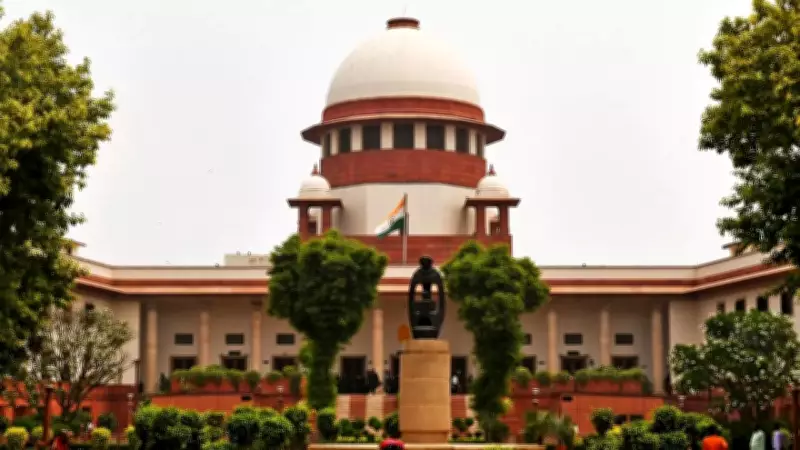
The Supreme Court has taken suo motu cognisance of severe vacancies and inadequate infrastructure in the National Company Law Tribunals (NCLT), which have led to substantial delays in deciding cases, particularly those involving resolution plans under the Insolvency and Bankruptcy Code (IBC). The court has decided to initiate remedial measures to address the issues.
Court's Observations on NCLT Functioning
A bench of Justices J B Pardiwala and K V Viswanathan stated that the problems faced by the tribunals need to be addressed on a war footing; otherwise, the very purpose and object of enacting the IBC would be frustrated. The court emphasized that NCLTs play a crucial role in the economy by attempting to sustain companies that are failing due to various factors and keep them afloat. However, the current condition prevailing at these tribunals is grim and dismal.
Staffing and Infrastructure Issues
The court noted that most tribunal staff, including the post of registrar, are appointed on a temporary basis. It highlighted an instance where the entire staff of NCLT, Mumbai, went on strike because salaries were not paid on time. The bench observed that such conditions impair the functioning of the tribunals.

Pending Resolution Plans
According to a report forwarded by the registrar of the NCLT principal bench, there are 363 applications (resolution proposals) awaiting approval. The delays range from 48 days to 738 days, and in some cases, up to four years. The reasons assigned for these delays include lack of adequate infrastructure, resulting in half-day sittings of benches, interchange of bench combinations, and a large pendency of objections to resolution plans filed by various stakeholders.
Current Vacancies
The statutory sanctioned strength for all NCLT benches is 63 members, comprising a president, 31 judicial members, and as many technical members. Currently, only 28 judicial members and 26 technical members are posted across benches, leaving numerous vacancies that hamper the tribunal's efficiency.