The Supreme Court of India on Monday strongly intervened in a case involving a judicial officer's shocking misconduct, staying a Madhya Pradesh High Court order that had directed his reinstatement. The officer, a civil judge, was removed from service after allegedly urinating inside a train compartment while intoxicated in 2018, an act the apex court termed as the "grossest grave misconduct."
The Incident: A Night of Drunken Disorder on Rails
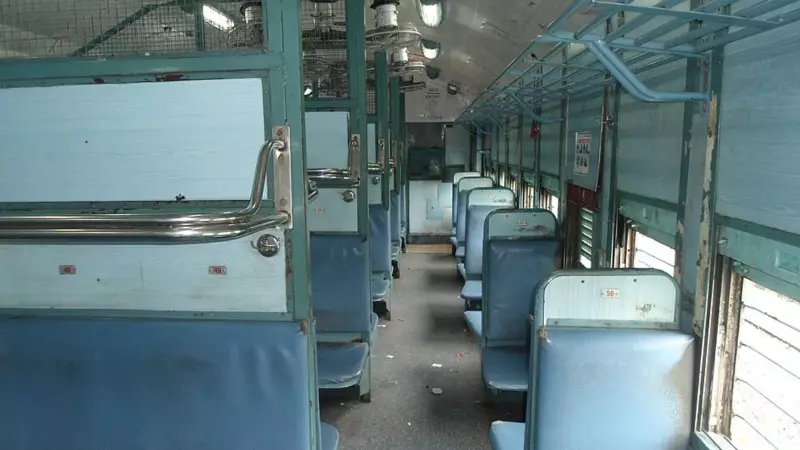
The controversy stems from an incident dated June 16, 2018. The civil judge, Class-II, was returning from Bhopal to Jabalpur aboard the Indore–Jabalpur Overnight Express. According to the allegations, he consumed liquor inside Coach A-1 and proceeded to create a major nuisance.
He reportedly misbehaved with and abused fellow passengers as well as the train's conductor and Travelling Ticket Examiner (TTE). His behaviour was so disruptive that passengers were forced to pull the emergency chain, causing a delay in the train's schedule. In a particularly egregious act, the inebriated officer allegedly urinated on the berth of a nearby passenger. During the altercation, he also flashed his official identity card.

"He urinated in the compartment. There was a lady present," remarked Justice Sandeep Mehta, part of the Supreme Court bench alongside Justice Vikram Nath, highlighting the gravity of the act.
Legal and Departmental Fallout: Acquittal vs. Dismissal
Following complaints, the judge was deboarded at Pipariya railway station, and a case was registered against him under Section 145 of the Railways Act. Although arrested, he was released on bail the same day as the offence was bailable.
The case took two parallel paths: criminal and departmental. In the criminal case, the Special Railway Magistrate in Jabalpur acquitted him on March 23, 2019. The acquittal came after key witnesses, including the TTE and the woman passenger who complained about the urination, turned hostile and refused to support the prosecution's case. The magistrate also noted that a medical examination did not find alcohol in his system.
However, a separate departmental inquiry found him guilty of misconduct. The inquiry also held him accountable for not taking prior travel permission from his controlling officer and for not informing his superiors about his arrest. The Administrative Committee of the Madhya Pradesh High Court proposed removal from service, which was approved by the Full Court on September 24, 2019.
High Court's Reinstatement Order and Supreme Court's Sharp Rebuke
The judicial officer challenged his termination in the High Court. A Division Bench led by the then Chief Justice Suresh Kumar Kait, in an order dated May 6, 2025, quashed the termination. The HC reasoned that his criminal acquittal was based on appreciation of evidence and not merely technicalities. It stated that the departmental enquiry lacked fresh evidence, making the punishment of removal "arbitrary" and "disproportionate." The HC directed his reinstatement, suggesting only a minor penalty for procedural lapses like not seeking travel approval.
The Supreme Court, however, took a starkly different view. Issuing notice on an appeal filed by the High Court's Registrar General, the bench stayed the reinstatement order. Justices Nath and Mehta minced no words, calling the officer's conduct "disgusting" and the "grossest grave misconduct." The stay indicates the apex court's serious reservations about condoning such behaviour, irrespective of the criminal trial's outcome, emphasizing the higher standards expected from a member of the judiciary.
The case underscores the complex interplay between criminal acquittals and disciplinary proceedings in cases involving public officials, especially those from the judiciary whose conduct is held to a stringent benchmark.