Supreme Court Intervenes in Chandigarh Law Officer Recruitment Exam Dispute
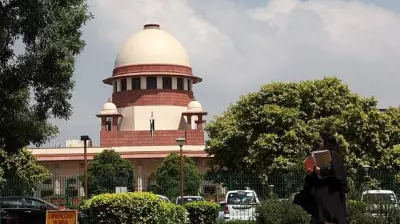
The Supreme Court of India has stepped in to resolve a contentious legal dispute surrounding a law officer recruitment examination conducted by the Chandigarh Municipal Corporation. This intervention came after two judges of the Punjab and Haryana High Court delivered conflicting opinions on the same constitutional question, highlighting the complexity of the issue.
The Background of the Recruitment Controversy
The case originated from a 2021 examination conducted for a single post of law officer within the Chandigarh Municipal Corporation. Charan Preet Singh emerged as the selected candidate following this competitive process. However, another candidate, Amit Kumar Sharma, challenged this appointment, claiming he had been unfairly penalized with a negative mark during the evaluation.
Sharma's grievance centered on a specific multiple-choice question that asked: "Which of the following Schedule of the Constitution is immune from judicial review on the grounds of violation of fundamental rights?" The available options were: A) Seventh Schedule, B) Ninth Schedule, C) Tenth Schedule, and D) None of the above.
Conflicting Judicial Interpretations
The recruiting authority had designated option B, "Ninth Schedule," as the correct answer based on established administrative practice. Sharma, however, had selected option D, "None of the above," arguing that no Schedule of the Constitution enjoys absolute immunity from judicial review regarding fundamental rights violations.
Initially, a single judge of the Punjab and Haryana High Court upheld the answer key, referencing Article 31B and previous judicial rulings that seemed to support the Ninth Schedule's protective status. This decision appeared to validate the recruiting authority's position and Sharma's negative marking.
Subsequently, a division bench of the same high court revisited the matter and arrived at a different conclusion. The bench cited the landmark Supreme Court judgment in I.R. Coelho v. State of Tamil Nadu, which established that immunity under the Ninth Schedule is not absolute. The bench emphasized that laws placed in the Ninth Schedule remain subject to judicial review if they violate the basic structure of the Constitution.
Based on this interpretation, the division bench ruled that Sharma's answer was indeed correct and ordered a revision of his marks, creating a judicial conflict that necessitated higher intervention.
Supreme Court's Definitive Ruling
When the matter reached the Supreme Court, the justices acknowledged the intricate constitutional interpretation involved. They noted that both answers presented in the examination could not be considered entirely incorrect from a legal perspective.
The court made a significant observation that even experienced judges, after examining multiple constitutional rulings and precedents, had reached divergent conclusions on this very question. In this context, the Supreme Court stated that it would be unreasonable to expect examination candidates to arrive at a single definitive answer to such a nuanced constitutional query.
Ultimately, the Supreme Court held that "from a law graduate's point of view, both the answers may be correct," effectively resolving the dispute by recognizing the complexity of constitutional law interpretation. This ruling brings closure to a recruitment controversy that exposed the challenges of examining complex legal principles through multiple-choice questions.