In a poignant verdict delivered after a 34-year legal struggle, the Supreme Court of India has restored 50% back wages to a hotel employee who was terminated from service in 1991. Sadly, the worker, Dinesh Chandra Sharma, passed away before seeing justice finally prevail.
A Legal Battle Spanning Decades
The case traces its origins back to 1978, when Dinesh Chandra Sharma began his employment as a room attendant at a hotel. His service was abruptly terminated in July 1991 on charges of alleged misconduct. Sharma challenged this termination, leading to an industrial dispute.
The Labour Court, after proceedings, found the management's inquiry against Sharma to be unfair. Notably, even when given a chance to prove the charges in court, the hotel management failed to present any evidence. Consequently, in December 2015, the Labour Court ordered Sharma's reinstatement with full back wages.
The Twists in the High Court
The legal journey then moved to the Rajasthan High Court. A single judge bench modified the Labour Court's award, reducing the back wages to 50%. However, a division bench of the same High Court later set aside even this reduced relief. The division bench based its decision on the grounds that the employee had not sufficiently proved he was not "gainfully employed" during the period between his termination and reinstatement.
This order was challenged before the Supreme Court by Sharma's legal representatives, as the employee himself was no longer alive to continue the fight.
Supreme Court's Landmark Observations
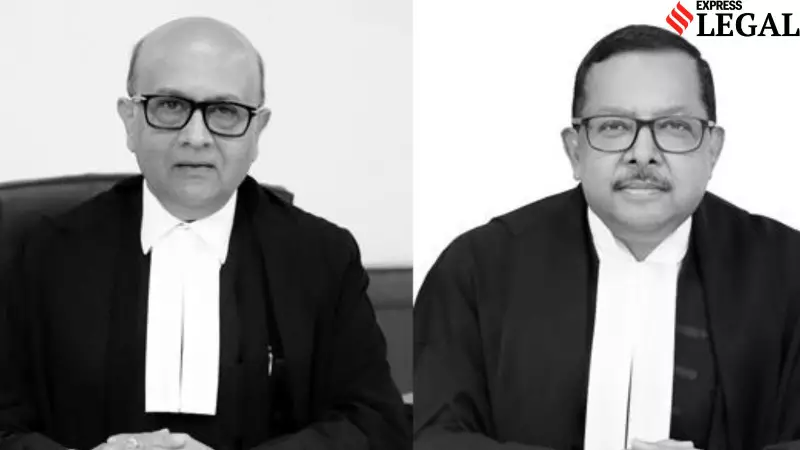
A bench comprising Justices Manoj Misra and Ujjal Bhuyan heard the appeal. The apex court set aside the division bench's order and restored the single judge's directive of 50% back wages.
The court made several critical observations that clarify the law on back wages in cases of punitive termination:
The bench held that the requirement for a workman to plead non-gainful employment is not an "inviolable rule." Each case must be judged on its own unique facts. In this instance, the court noted that an affidavit stating Sharma was not gainfully employed during the intervening years was not refuted by the management with any counter-evidence.
In a significant ruling, the court stated that doing odd jobs to survive cannot be a ground to deny back wages, especially when the termination is a form of punishment. The judgment eloquently explained, "Punishment, as a matter of course, visits a person with stigma which hampers re-employment."
The court further reasoned that the single judge's decision to grant 50% back wages was just and proper, considering Sharma had served for a long period and that finding gainful employment in government or public sector becomes exceedingly difficult after crossing a certain age barrier.
The Final Verdict and Its Implications
Allowing the appeal, the Supreme Court bench restored the 50% back wages award. This judgment underscores the judiciary's role in protecting workers' rights, even when justice is delayed. It establishes a crucial precedent that the stigma of a punitive termination and the necessity of taking up menial work for survival should not deprive an employee of their rightful back wages.
The ruling brings a close to a three-and-a-half-decade-long legal saga, offering a measure of posthumous justice to Dinesh Chandra Sharma and his family, while reinforcing the principles of equitable treatment in labour law.