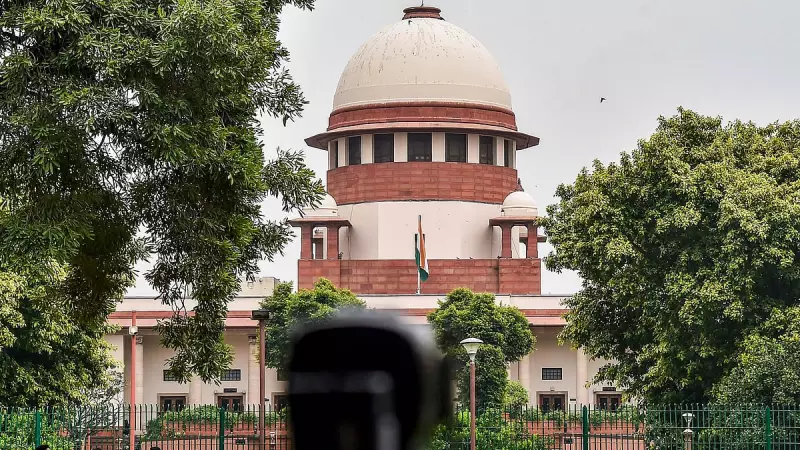
Supreme Court Declines to Hear PIL on SC/ST Reservation in State Bar Councils
In a significant legal development, the Supreme Court of India has refused to entertain a Public Interest Litigation (PIL) that sought the implementation of reservations for Scheduled Castes (SC) and Scheduled Tribes (ST) in State Bar Councils across the country. The decision was delivered by a bench headed by the Chief Justice of India, marking a pivotal moment in the ongoing discourse on representation within the legal profession.
Petitioners' Argument Based on Precedent for Women Lawyers
The petitioners in this case heavily relied upon a previous Supreme Court order that had granted representation for women lawyers in State Bar Councils. They argued that similar principles of inclusivity and affirmative action should be extended to SC/ST communities to ensure equitable participation in the legal field. The PIL emphasized the historical underrepresentation of these marginalized groups in bar councils and highlighted the need for structural reforms to promote diversity.
Key points from the petitioners' submission included:
- Reference to the earlier judgment that mandated seats for women in State Bar Councils as a model for progressive change.
- Statistical data showcasing the low percentage of SC/ST members in bar councils, underscoring systemic barriers.
- A call for the Supreme Court to intervene and direct the Bar Council of India to implement quota policies, aligning with constitutional mandates for social justice.
Supreme Court's Reasoning and Legal Grounds for Dismissal
The Supreme Court bench, after hearing the arguments, declined to entertain the PIL on multiple grounds. The court noted that the issue involves complex legal and policy considerations that are better addressed through legislative or executive channels rather than judicial intervention. Additionally, the bench pointed out procedural shortcomings in the petition, including the lack of sufficient evidence to warrant immediate action.
Factors influencing the court's decision:
- Jurisdictional limitations: The court emphasized that matters of reservation in professional bodies often fall under the purview of statutory authorities like the Bar Council of India, which has the autonomy to frame its own rules.
- Precedent analysis: While acknowledging the petitioners' reliance on the women's representation case, the bench distinguished it by highlighting differences in legal context and societal impact between gender-based and caste-based quotas.
- Procedural aspects: The petition was found to lack detailed groundwork, such as comprehensive consultations with stakeholders or empirical studies on the current state of SC/ST representation in bar councils.
This ruling has sparked discussions among legal experts and activists, with some praising the court for upholding the separation of powers, while others express concern over the missed opportunity to advance social equity in the legal arena. The decision underscores the ongoing challenges in balancing judicial activism with institutional boundaries in India's democratic framework.