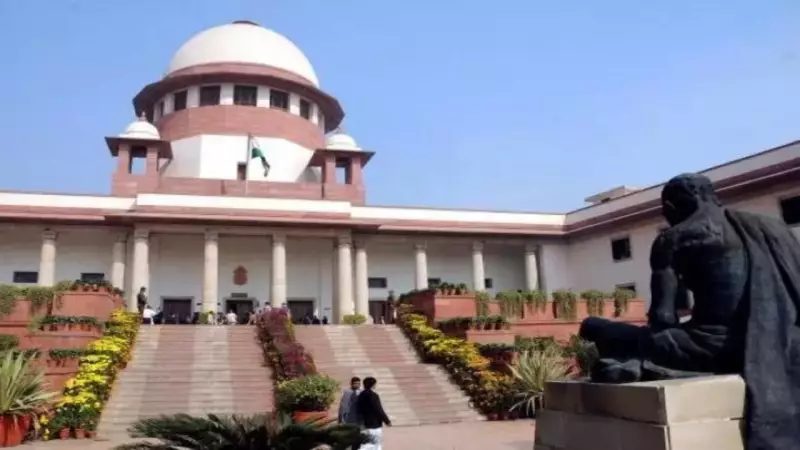
In a significant development, the Supreme Court of India has expressed its unwillingness to directly intervene in hate speech cases emerging from various parts of the country. The apex court emphasized that affected individuals should first approach local police authorities or respective high courts with their grievances.
Court's Firm Stance on Hate Speech Complaints
A bench comprising Justices Vikram Nath and Sandeep Mehta made this clear while hearing an application concerning alleged calls made by lawmakers from different states for the social and economic boycott of a particular community. The bench firmly stated that the Supreme Court cannot possibly entertain every such incident reported from across India.
"How can this court continue to monitor all such instances all over the country? You approach the authorities. Let them take action, otherwise go to HC," the bench remarked during the hearing on Tuesday.

Legal Arguments and Counter-Arguments
Advocate Nizam Pasha, representing journalist Qurban Ali, argued before the court that state authorities were failing to take appropriate action against hate speech violations. He pointed out that the apex court's previous order directing suo-motu action by police in hate speech cases was being violated with impunity.
However, Solicitor General Tushar Mehta opposed the plea, stating that only instances of hate speeches against a particular community were being brought before the court while other cases were being ignored. "No one can indulge in hate speech - that is my stand. But while complaining, a public spirited person cannot be selective," Mehta submitted.
Constitutional Violations and Historical Context
The application before the court highlighted serious constitutional concerns, stating that calls for boycott based solely on religion violate Article 15 of the Indian Constitution. Such actions were described as threats to national unity and integrity, contradicting the vision of India's constitution framers.
Pasha brought to the court's attention specific instances, including controversial remarks made by an Assam minister about "gobi farming" following the Bihar assembly poll results, which allegedly referenced the violent 1989 Bhagalpur riots.
The application emphasized that the poorest income groups bear the major impact of such discrimination and social boycotts, while state authorities remain inactive despite their constitutional duty to protect all citizens.
Court's Final Directive and Future Proceedings
After a brief hearing, the Supreme Court decided that the applications would be heard along with the main case and scheduled the matter for next month. This development follows last month's decision where the court agreed to hear an application filed by former Patna High Court judge Anjana Prakash and journalist Qurban Ali concerning a video circulated by Assam BJP.
The court maintains that while it has already passed necessary orders regarding hate speech, primary responsibility for action lies with police authorities as per existing laws, with high courts serving as the appropriate appellate forum for grievances.