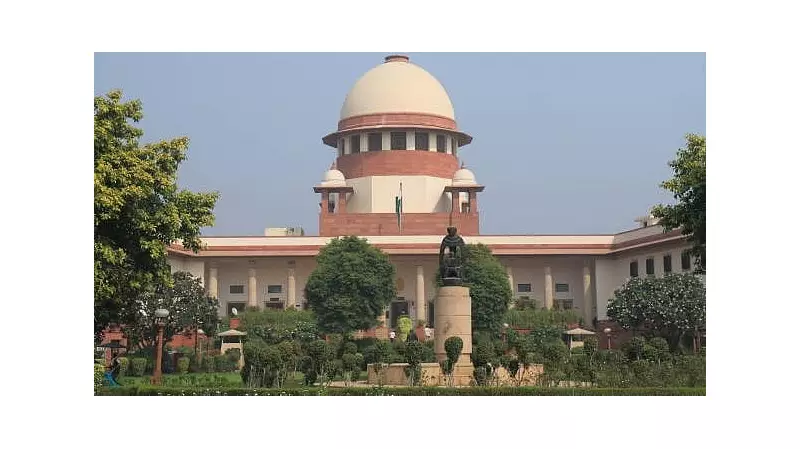
In a significant development for gender justice in India, the Supreme Court has expressed strong disapproval of Talaq-e-Hasan, a form of divorce in Muslim personal law. The apex court has indicated that it is considering referring the legal challenge against this practice to a larger Constitution bench, signaling the gravity of the constitutional questions involved.
Continuation of a Landmark Journey
This latest judicial scrutiny comes eight years after a landmark verdict that reshaped Muslim personal law in the country. In 2017, the Supreme Court declared the practice of Triple Talaq unconstitutional. The court had found the instant divorce mechanism to be arbitrary and a violation of the fundamental rights of Muslim women, setting a powerful precedent for reform.
Understanding the Current Case
The focus is now on Talaq-e-Hasan, which is another method of divorce where a husband pronounces 'talaq' once a month over three months. While proponents argue it allows for a period of reflection and reconciliation, petitioners have challenged it on grounds similar to those used against Triple Talaq. They contend that it is still a form of unilateral divorce that leaves women vulnerable and infringes upon their right to a life of dignity and equality.
The court's current stance of deprecating the practice and contemplating a referral to a Constitution bench underscores the legal and societal importance of the issue. A Constitution bench, typically comprising five or more judges, is set up to deliberate on substantial questions of law.
Implications and the Road Ahead
The potential outcome of this case could have far-reaching consequences for the Muslim community in India, particularly concerning the rights of women within the framework of personal laws. The 2017 judgment on Triple Talaq was a watershed moment, and a similar examination of Talaq-e-Hasan represents the next potential step in the ongoing national conversation about the intersection of religious practices, gender equality, and constitutional rights.
This judicial process reaffirms the Supreme Court's role as a guardian of fundamental rights and its commitment to ensuring that personal laws conform to the principles of the Indian Constitution. The legal journey, as reported by Ashish Tripathi on November 19, 2025, is being closely watched by legal experts, women's rights activists, and community leaders across the nation.