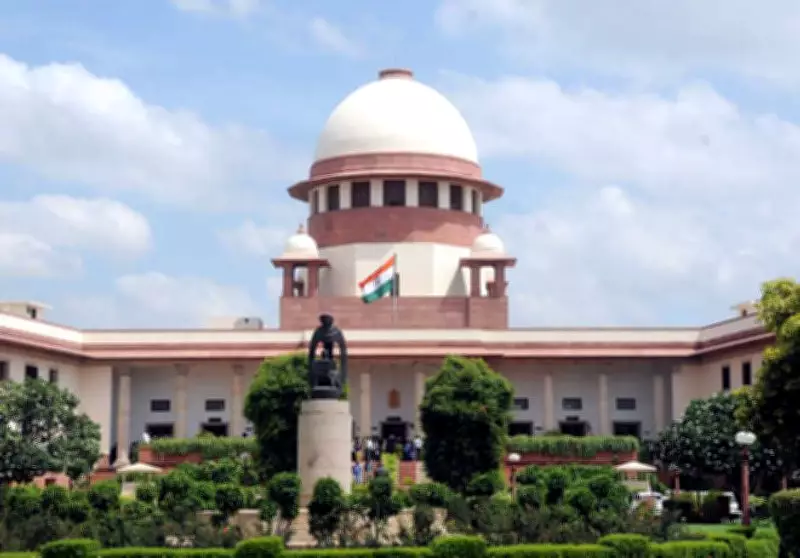
The Supreme Court of India has quashed the conviction and sentence of a man under the Protection of Children from Sexual Offences (POCSO) Act, invoking its extraordinary powers under Article 142 of the Constitution. This decision came after the victim, who was a minor at the time of the incident, married the accused upon attaining the age of majority.
Background of the Case
The accused and the victim fell in love when she was studying in Class 12. However, when he refused to marry her, she lodged a complaint against him. This led to his conviction and a 10-year sentence under the POCSO Act for having sexual relations with a minor.
Subsequent Events
After becoming a major, the victim married another man, who later left her upon learning of her previous relationship. Meanwhile, the convicted man, who was out on bail after suspension of his sentence, reconciled with her. They eventually got married and started living together.

On February 8, 2021, the victim filed a sworn affidavit in the Madras High Court, stating that she and the appellant had been living together for four years and had settled the matter. She expressed her desire to depose in favor of the appellant and requested that his conviction be set aside so they could live peacefully in the future.
High Court and Supreme Court Proceedings
When the Madras High Court rejected her plea, the man appealed to the Supreme Court. The apex court interacted with the woman through a lawyer fluent in Tamil. She informed the bench that she had received Rs 10 lakh from the man as demanded by her.
“It is specifically stated by her that in case conviction of the appellant is set aside, she has no objection,” noted a bench comprising Justice J.K. Maheshwari and Justice Atul S. Chandurkar.
State Government's Stance
The state government expressed no reservation about setting aside the conviction, provided it was not treated as a precedent for other cases. The bench recorded this position, emphasizing the unique circumstances of the case.
Supreme Court's Decision
“Therefore, at this stage, without entering into the merits of the case, in the peculiar facts, as narrated above, we deem it appropriate to exercise our plenary power under Article 142 of the Constitution of India for setting aside the judgment of conviction and sentence of the appellant for the charge under Section 5(1) of POCSO Act and in terms of the statements as recorded and the appellant is acquitted from the charge,” the bench stated in its May 26 order.
Allowing the appeal and setting aside the conviction and sentence imposed by the Sessions court and confirmed by the High Court, the top court said, “The appellant and the victim are left free to live their life peacefully in society as spouses.”
Clarification on Precedent
The bench made it clear that the order was passed in the peculiar facts of the case and would not be treated as a precedent for any other purpose. Additionally, since the appellant's substantive jail sentence was suspended by the High Court on June 3, 2019, he is not required to surrender unless involved in any other case.