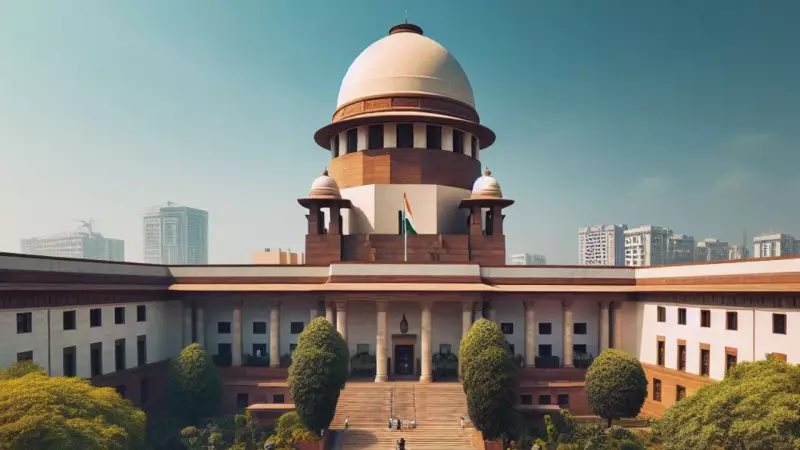
In a landmark judgment, the Supreme Court of India has ruled that at least 95 post-graduate medical students, who were irregularly admitted by six private medical colleges in Puducherry in the 2017-18 academic session, must now complete three months of unpaid rural service to receive their degrees. The apex court also ordered significant financial compensation for the meritorious candidates who lost their seats due to the colleges' actions.
The Core of the Controversy
The case revolved around admissions made in 2017-18, where private medical institutions in the Union Territory of Puducherry bypassed the established inter-se merit order. This procedural violation deprived more deserving candidates of their rightful seats. A bench comprising Chief Justice of India Surya Kant and Justice Joymalya Bagchi pronounced the verdict, holding the colleges squarely responsible for creating the situation.
The court noted that while the students who benefitted from the irregularities have now completed their courses, withholding their degrees would not serve public interest. However, to balance the scales of justice, a unique condition was imposed.

The Court's Directive: Service and Compensation
The Supreme Court issued a two-pronged order to address the injustice. Firstly, it mandated that all 95 students must render three months of pro bono rural medical service. They are prohibited from claiming any honorarium or wages from the Puducherry government for this period. Their degrees will be issued only upon completion of this service.
Secondly, the court ordered compensation for the wronged candidates. Each of the meritorious students who lost a seat is eligible for Rs 10 lakh as compensation, plus interest accruing since 2017. The bench clarified that the total payout for each student would now exceed Rs 15 lakh.
Path to Claiming Compensation
Interestingly, while 95 students were affected, only 18 of them pursued the matter to the Supreme Court and secured this relief. The judgment explicitly opens the door for the others, stating that they shall be eligible to claim similar compensation if they approach the appropriate court and obtain favorable orders.
To expedite the process for the 18 petitioners, the Supreme Court directed its registry to transfer the entire compensation amount, with accrued interest, to the Registrar-General of the Madras High Court. The Chief Justice of the High Court has been requested to appoint a judicial officer to verify individual claims and disburse the funds, with the entire exercise to be completed within four weeks.
A Message to Private Institutions
The court did not mince words in criticizing the role of the private medical colleges. It stated there could be no doubt that the colleges were responsible for the situation, which led to the deprivation of admission for at least one year for the deserving candidates. This verdict sends a strong message about the consequences of flouting transparent admission procedures in professional education.
The judgment thus achieves a nuanced balance: it allows the irregularly admitted students to legitimize their qualifications through public service, while simultaneously ensuring substantial restitution is provided to those whose careers were unfairly delayed.