Supreme Court Takes Decisive Step in Heart-Wrenching Euthanasia Plea
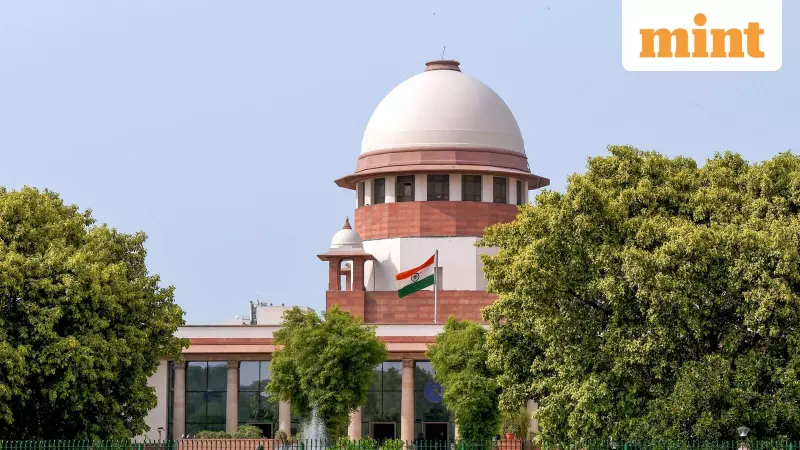
The Supreme Court of India has directed the Noida District Hospital to establish a primary medical board to evaluate the possibility of passive euthanasia for Harish Rana, a 31-year-old man who has been in a vegetative state for over a decade. The bench, comprising Justices JB Pardiwala and KV Viswanathan, issued this significant order after hearing a plea from the patient's father, who stated that his son's health condition has deteriorated from bad to worse.
A Decade of Suffering and a Family's Plea
Harish Rana's tragic story began in 2013 when he was a student at Punjab University. He suffered severe head injuries after falling from the fourth floor of his paying guest accommodation. The accident left him with 100 per cent disability quadriplegia, completely bedridden and dependent on an artificial support system. For twelve long years, he has remained in a persistent vegetative state.
This marks the second time in as many years that Rana's elderly parents have approached the top court, seeking permission for passive euthanasia to end their son's prolonged suffering. The court was informed that the parents have exhausted their resources, even selling their house to sustain his medical treatment.

The Legal Journey and Court's Directive
During the proceedings, advocate Rashmi Nandakumar, representing the father, clarified that the plea was not for active euthanasia but for passive euthanasia, which involves withholding life-sustaining treatment as per the Supreme Court's 2018 Common Cause judgment. She emphasized that despite all efforts and assistance from the Uttar Pradesh government, Rana's condition shows no improvement, and he frequently falls ill, requiring hospital visits.
The bench, after reviewing medical reports, observed the patient's condition as "pathetic" and instructed the primary board to submit its assessment within two weeks. Justice Pardiwala stated, "We want the primary board to give us a report that life-sustaining treatment can be withheld." If the primary board recommends it, a secondary board will be constituted as the next step in the legal process.
Previous Judicial Stance and the Path Forward
The legal path has been complex. On August 20, last year, the Supreme Court had described the case as a "very hard one" and sought the Centre's response. Subsequently, on November 8, the court noted a Union Health Ministry report suggesting home care with state government support.
However, the current plea argues that this has not alleviated the situation. This order represents a pivotal development, as the Delhi High Court had previously refused to refer the case to a medical board in July last year, noting that Rana was not on a ventilator and could sustain himself without extra external aid.
The Supreme Court's directive to form a medical board reignites the critical debate on the right to die with dignity in India, balancing legal tenets with profound human suffering.