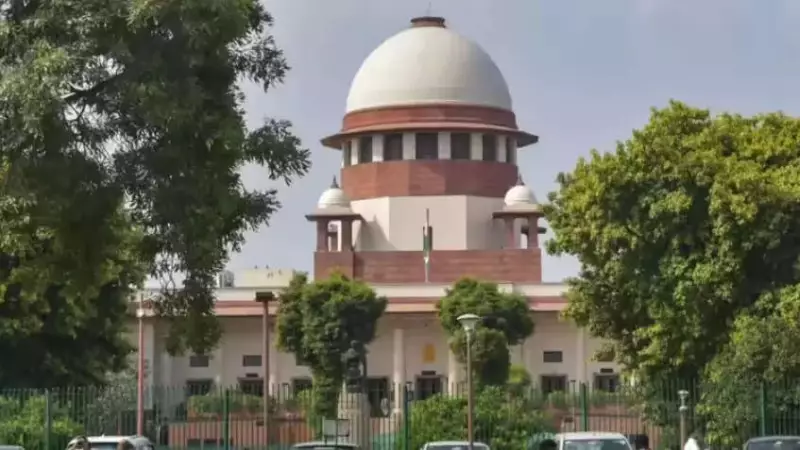
In a landmark judgment that took nearly a quarter of a century to conclude, the Supreme Court of India on Monday convicted a man and his 94-year-old mother for the dowry death of a 20-year-old woman in 2001. The bench, while delivering the verdict, voiced a profound concern over a critical contradiction plaguing the legal battle against dowry: the laws are failing to curb the social evil, yet they are also being misused for ulterior motives.
A Two-Decade-Old Tragedy and a Belated Conviction
The case revolved around the horrific death of Nasrin, a 20-year-old woman who was set on fire by pouring kerosene on her. She died within a year of her marriage. The prosecution's case was that she was killed for failing to meet dowry demands, which included a colour television, a motorcycle, and Rs 15,000 in cash.
The trial court had initially convicted both her husband and mother-in-law. However, the Allahabad High Court later acquitted them. The High Court's decision hinged on a part of the father's statement where he mentioned his daughter was "happily" married. The Supreme Court bench, comprising Justices Sanjay Karol and N K Singh, set aside this acquittal, restoring the conviction.

The apex court awarded life imprisonment to the husband. However, showing judicial compassion, it refrained from sending the 94-year-old mother to prison, considering her advanced age. The court underscored that the High Court was "misdirected" by the single word 'happily'. Reading the father's entire testimony revealed he had also stated his daughter was assaulted and dowry was demanded, and she returned to her marital home only after his persuasion and assurances.
The Supreme Court's Stark Diagnosis: Ineffectiveness vs. Misuse
Moving beyond the specifics of the case, the bench delivered a powerful commentary on the state of anti-dowry legislation in India. It identified a "judicial tension" arising from a dual failure.
On one hand, the court noted the "social evil of dowry still prevails," demonstrating the "ineffectiveness of the anti-dowry laws." The practice, it observed, has deep roots in society and will not change swiftly, requiring concentrated efforts from the legislature, law enforcement, judiciary, and civil society.
On the other hand, the court acknowledged that the provisions of the Dowry Prohibition Act and Section 498-A of the IPC are also "being misused by women for ulterior motives." This oscillation between the law's ineffectiveness in stopping the crime and its potential for misuse creates a complex challenge that demands urgent resolution.
Directives for the Future: Awareness and Expedited Justice
Expressing concern over the 24-year delay in concluding the case, the Supreme Court passed a series of directions to address systemic issues.
The bench called for social measures to tackle the menace by spreading awareness among the youth, recognizing that law alone has been insufficient. Furthermore, it highlighted the backlog of similar cases.
The court requested all High Courts to take stock of the situation and ascertain the number of pending cases dealing with dowry death (Section 304-B IPC) and cruelty by husband or relatives (Section 498-A IPC), from the oldest to the newest, for their expeditious disposal. This move aims to prevent other families from enduring such protracted legal battles for justice.
The judgment serves as a stark reminder of the grim reality of dowry-related harassment and deaths, while also candidly addressing the complexities and unintended consequences that have emerged in the legal framework designed to combat it.