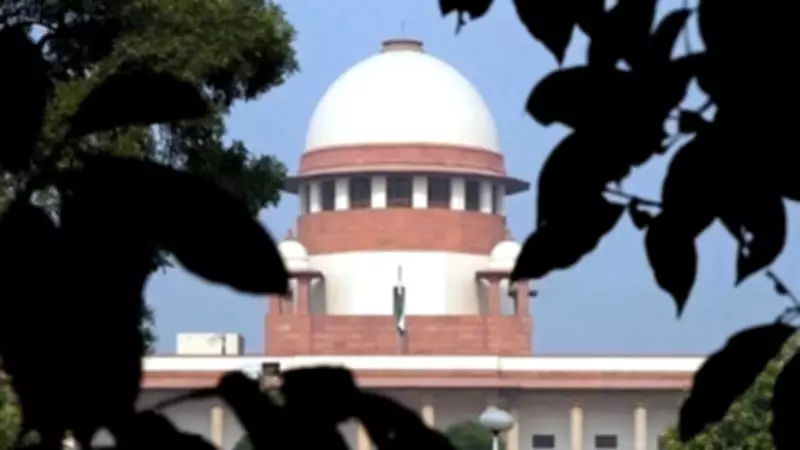
Supreme Court Objects to High Court's Repeated Orders Without Granting Relief
The Supreme Court of India has strongly objected to the repeated orders issued by the Allahabad High Court that fail to provide any substantive relief to petitioners. In a significant ruling, the apex court emphasized that constitutional or statutory remedies are not intended for mere academic discourse but must deliver tangible outcomes.
Court's Emphasis on Effective Judicial Processes
The Supreme Court underscored the necessity and compelling need to keep legal remedies simple, effective, and efficient. This directive aims to ensure that the judicial system operates with clarity and purpose, avoiding procedural delays and redundant actions that do not serve the interests of justice.
By highlighting this principle, the court seeks to reinforce the foundational role of the judiciary in providing accessible and meaningful relief to citizens. The ruling serves as a reminder to all courts to focus on practical solutions rather than engaging in theoretical exercises that do not resolve disputes.
Implications for Future Legal Proceedings
This decision is expected to have far-reaching implications for how high courts and lower courts handle cases involving constitutional or statutory remedies. It calls for a more results-oriented approach, where judicial orders are crafted to directly address the grievances of litigants and ensure timely justice.
The Supreme Court's stance is likely to influence future judgments, promoting a culture of efficiency and effectiveness within the Indian legal system. This move aligns with broader efforts to streamline judicial processes and reduce the backlog of cases across the country.
Overall, the court's intervention marks a pivotal moment in upholding the integrity and functionality of India's judicial framework, ensuring that remedies are not just theoretical constructs but practical tools for justice.