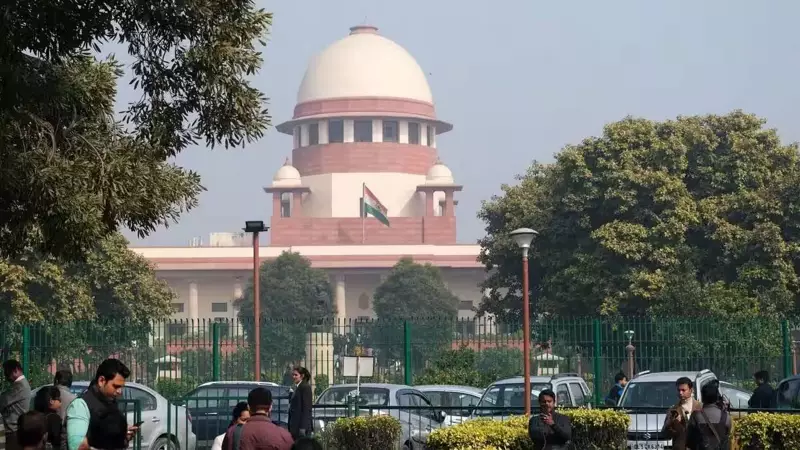
The Supreme Court of India has decided to examine a contentious legal provision that grants sweeping, lifetime immunity to the Chief Election Commissioner (CEC) and Election Commissioners (ECs). On Monday, a bench led by Chief Justice of India Surya Kant and comprising Justice Joymalya Bagchi issued a formal notice to the Central Government and the Election Commission of India (ECI) on a Public Interest Litigation (PIL) challenging this law.
Court's Stance and the Challenged Provision
The bench, while expressing its intention to scrutinize the matter, stated, "We would like to examine it. We are issuing notice." However, it declined the petitioner's request for an immediate stay on the operation of the provision. The CJI clarified that such provisions are not stayed lightly, especially when no immediate suffering is demonstrated, and the court is primarily examining the constitutional validity.
The legal provision under challenge is Section 16 of The Chief Election Commissioner and Other Election Commissioners (Appointment, Conditions of Service and Term of Office) Act, 2023. This section states that no court can entertain or continue any civil or criminal proceedings against a serving or former CEC/EC for any act, word, or thing committed in the discharge of their official duty.
Petitioner's Arguments: An "Unprecedented" Power
The PIL was filed by the NGO Lok Prahari, represented by its General Secretary S N Shukla. The petition raises grave concerns about the nature of the immunity granted. It argues that Parliament has conferred a level of protection that the Constitution's framers did not grant even to the President, Governors, or judges of the higher judiciary.
The plea contends that the provision "gives unprecedented, unbridled power" by providing a "complete blanket permanent immunity for life" from all proceedings, even for potential wrongdoings involving gross misuse of office. It warns that this could disturb the level playing field in elections, allowing the election commissioners a free hand to act with bias for or against any political party or candidate.
Shukla also challenged the legislative basis of the Bill, arguing that while the government cited Article 324(2) of the Constitution during the debate, that clause only deals with the appointment process and not service conditions. Therefore, he submitted, the immunity clause was "deceptively" included in the legislation.
Implications for Democracy and Rule of Law
The core of the petitioner's argument is that such absolute immunity is antithetical to accountability and the rule of law, especially for officials tasked with safeguarding the bedrock of Indian democracy—free and fair elections. The PIL emphasizes that the intervention of the Supreme Court is "extremely necessary" for protecting the proper functioning and future of democracy in the country.
By issuing the notice, the Supreme Court has opened a crucial constitutional debate on the limits of immunity for high constitutional functionaries. The outcome of this case will have profound implications for the accountability framework of one of India's most critical institutions. The Centre and the ECI are now required to file their responses to the court's notice.