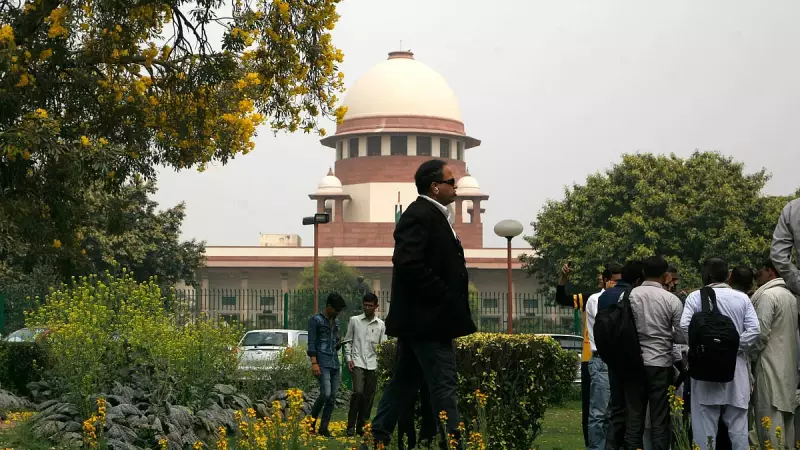
In a significant ruling that balances free speech concerns with social harmony, the Supreme Court of India has clarified its position on handling hate speech cases across the country.
Bench's Stance on Hate Speech Regulation
The observations came from a bench comprising Justices Vikram Nath and Sandeep Mehta during a hearing on November 25, 2025. The court was addressing an application that raised serious concerns about alleged calls for the social and economic boycott of a particular community.
The bench explicitly stated that it is "not inclined to either legislate or monitor every incident of hate speech", emphasizing the practical limitations of judicial oversight in such matters. This position underscores the court's view that while hate speech is a serious concern, the judiciary cannot become a monitoring agency for every instance that occurs nationwide.
Context of the Case
The matter before the court involved specific complaints about organized campaigns targeting a community through calls for their social and economic isolation. Such boycotts can have devastating effects on the targeted groups, affecting their livelihoods and social integration.
The bench heard detailed arguments about the growing trend of hate speech incidents and their impact on communal harmony. However, the justices maintained that creating new legislation or establishing comprehensive monitoring mechanisms falls outside the judiciary's purview.
Broader Implications
This ruling has significant implications for how hate speech cases will be handled in India's legal framework. It reinforces the existing legal provisions while acknowledging the challenges in implementing blanket monitoring of speech-related offenses.
The court's position suggests that addressing hate speech effectively requires a multi-pronged approach involving existing laws, law enforcement agencies, and societal awareness rather than relying solely on judicial intervention for every incident.
Legal experts suggest this ruling may influence how lower courts handle similar cases and could shape future discussions about hate speech legislation in Parliament.