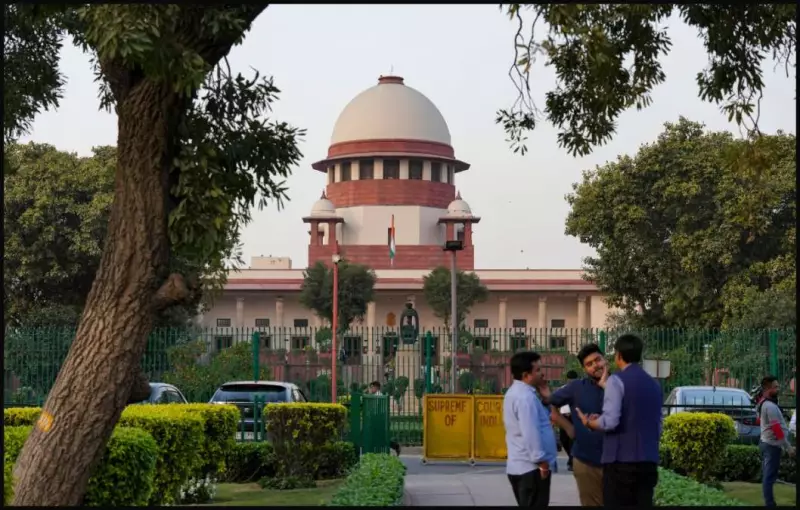
In a landmark judgment that reinforces constitutional boundaries, the Supreme Court of India has firmly stated that it is not appropriate for the judiciary to set timelines for the President and Governors to clear bills. The verdict came on November 20, 2025, and addresses a critical question about the balance of power between different branches of government.
Constitutional Sanctity Over Judicial Intervention
The Supreme Court bench, comprising Chief Justice of India D.Y. Chandrachud and Justice P.S. Narasimha, delivered the significant ruling. They emphasized that the Constitution itself provides the framework for how bills should be processed by the highest offices in the country. Imposing external deadlines would interfere with this constitutional process.
The court was hearing a petition that sought to establish specific timeframes within which the President and Governors must decide on bills presented to them for assent. The petitioners argued that indefinite delays in granting assent to bills passed by legislatures undermine democratic processes and legislative work.
The Court's Reasoning and Legal Position
In its detailed judgment, the Supreme Court explained that Article 200 of the Indian Constitution specifically outlines the procedure for Governors regarding state bills, while Article 111 deals with the President's role in central legislation. The court noted that these constitutional provisions do not specify any time limits for decision-making, and it is not the judiciary's role to introduce them.
The constitutional scheme trusts the high offices of President and Governors to act responsibly and in accordance with their constitutional duties, the bench observed. Setting judicial timelines would amount to crossing the delicate balance of power between the executive and the judiciary.
The court further clarified that while there should be no unreasonable delay in decision-making, what constitutes 'reasonable time' must be determined case by case, considering the complexity and nature of each bill.
Implications for Legislative Process
This judgment has significant implications for India's legislative process. Several states have experienced prolonged delays in bill assent in recent years, leading to political controversies and legal challenges. The Supreme Court's ruling essentially maintains the status quo while reaffirming constitutional principles.
The decision protects the discretionary powers of constitutional authorities while acknowledging that these powers must be exercised responsibly. The court suggested that political and constitutional remedies, rather than judicial intervention, are the appropriate means to address concerns about delayed assent to bills.
Legal experts have noted that this judgment reinforces the principle of separation of powers, a cornerstone of India's constitutional democracy. It also sets an important precedent for future cases involving the relationship between different branches of government.
The ruling comes at a time when several important bills have been pending with Governors in various states, making this Supreme Court decision particularly relevant to current political developments across India.