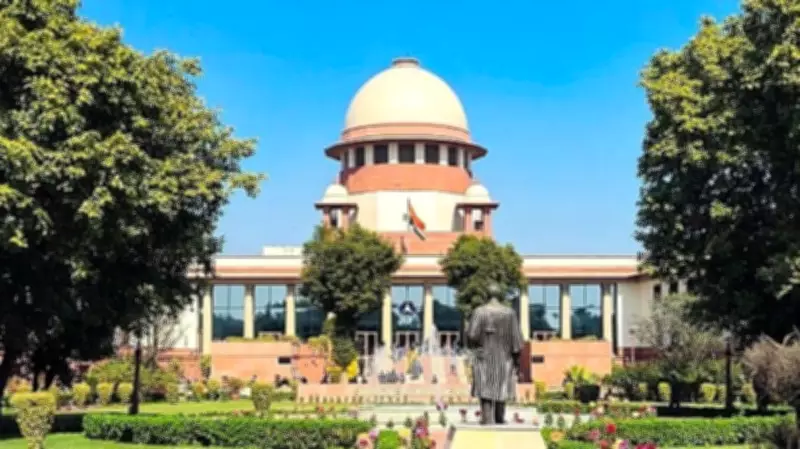
Supreme Court's Landmark Hearing on Gender Discrimination at Religious Sites
A historic nine-judge bench of the Supreme Court of India has commenced hearings on a series of petitions challenging discrimination against women at various religious places across the country. This significant judicial proceeding addresses deep-rooted issues of gender equality and religious practices in Indian society.
Centre's Position on Sabarimala Temple Entry
Ahead of the crucial hearing, the Central government filed detailed written submissions with the Supreme Court. In these documents, the Centre has explicitly requested the top court to uphold existing restrictions that prevent women of menstruating age from entering the famous Sabarimala temple in Kerala. This position aligns with traditional practices at the shrine dedicated to Lord Ayyappa.
The government's stance emphasizes the need to balance constitutional rights with the preservation of religious customs and beliefs that have been followed for centuries. Legal experts anticipate that this submission will play a pivotal role in shaping the court's final judgment on this sensitive matter.

Broader Implications for Religious Discrimination Cases
This nine-judge bench hearing represents a comprehensive examination of discrimination against women at religious sites beyond just Sabarimala. The court is considering multiple petitions that highlight similar restrictions at other places of worship across different faiths in India.
The Supreme Court's eventual ruling is expected to establish crucial legal precedents regarding:
- The intersection of religious freedom and gender equality
- Constitutional protections against discrimination
- The state's role in regulating religious practices
- Women's rights to access public religious spaces
Legal scholars note that this hearing could potentially reshape the landscape of religious practice and gender justice in India for generations to come. The court's decision will need to carefully navigate complex constitutional questions while addressing deeply held cultural and religious beliefs.
Historical Context and Previous Judgments
The current hearing follows years of legal battles and previous Supreme Court judgments on related matters. In 2018, a five-judge bench of the Supreme Court had ruled in favor of allowing women of all ages to enter Sabarimala temple, declaring the traditional ban unconstitutional. However, that judgment faced significant opposition and implementation challenges.
The formation of this larger nine-judge bench indicates the Supreme Court's recognition of the fundamental constitutional questions involved and the need for a more definitive ruling that addresses broader principles beyond individual cases.
As the hearing progresses, all eyes remain on the Supreme Court, with various stakeholders including women's rights activists, religious organizations, and legal experts closely monitoring the proceedings. The outcome will undoubtedly have far-reaching consequences for gender equality and religious practice throughout the nation.