In a significant development addressing Delhi's persistent air pollution crisis, the Supreme Court of India on Wednesday revised its earlier order concerning restrictions on older vehicles in the National Capital Region (NCR). The bench, led by Chief Justice of India Surya Kant alongside Justices Joymalya Bagchi and Vipul Pancholi, provided crucial clarifications that modify the court's stance from August 12.
Pragmatic Shift on Vehicle Restrictions
The court modified its previous order which had barred coercive action against diesel vehicles older than 10 years and petrol vehicles older than 15 years in the NCR. The new directive clarifies that authorities can now take action against vehicles that fail to meet emission standards below BS-IV. This modification came at the request of the Delhi government, which argued for stricter measures against polluting vehicles as the city's air quality remains entrenched in the "severe" category.
Emphasizing the need for practical solutions, the bench stated, "Let us think of pragmatic and practical solution of the menace." The hearing is part of the court's ongoing scrutiny of Delhi's worsening air pollution, a problem that recurs annually with devastating health impacts.

Toll Plazas and Justice for Workers
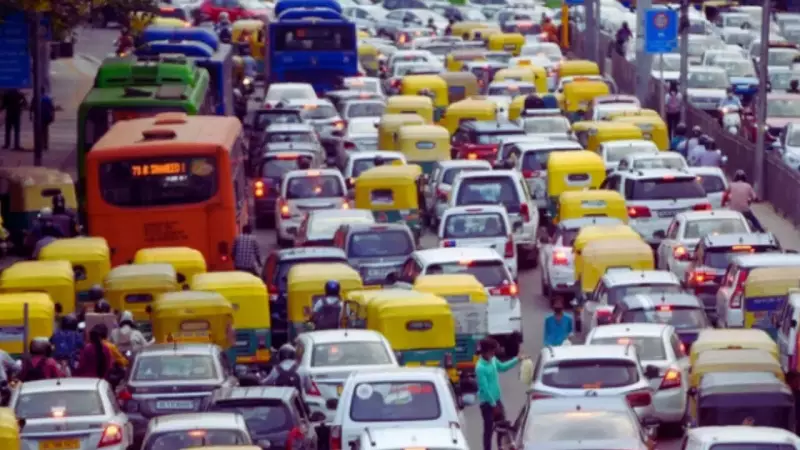
The court also tackled other significant contributors to pollution and hardship. It was informed about severe traffic congestion and long queues at nine toll plazas under the Municipal Corporation of Delhi (MCD) in Gurgaon, which substantially add to vehicular emissions. Taking a stern view, the bench directed the MCD to cooperate and consider suspending these toll plazas temporarily, demanding a decision within a week.
CJI Surya Kant remarked, "we do not want income you generate, but you definitely generate a lot of litigation from these tolls. We want to come out on a concrete plan for absolute no toll plaza till next year 31st January."
Showing concern for the economically vulnerable, the bench addressed the plight of construction workers idled by pollution-related work bans. It directed the Delhi government to verify affected workers and ensure direct bank transfers of financial aid, cautioning that the money should not "disappear, travel to another account." The government informed the court that around 7,000 out of nearly 2.5 lakh affected workers have been verified so far.
The Larger Pollution Picture and Enforcement Failures
The proceedings highlighted a grim reality of poor enforcement. Amicus curiae and senior advocate Aparajita Singh pointed out that air quality remains severe despite numerous court orders, with slow implementation of pollution-control protocols. The bench critically observed that affluent sections of society continue to flout rules by using large diesel vehicles and generators, while the poor bear the brunt of the health consequences.
CJI Surya Kant observed, "it is the poor and working classes who are the most exposed to hazardous air and suffer the worst health consequences."
The court was also presented with data from the Commission for Air Quality Management (CAQM), outlining major pollution sources:
- Transport: 41%
- Dust and Construction: 21%
- Industry: 19%
- Power Plants: 5%
- Residential Activities: 3%
- Other Sources: 11%
While stubble burning was noted as a periodic factor, the court's focus remained on constant local sources. Violations of bans on outdoor sporting events during severe pollution, which expose children to harmful air, were also flagged during the hearing.