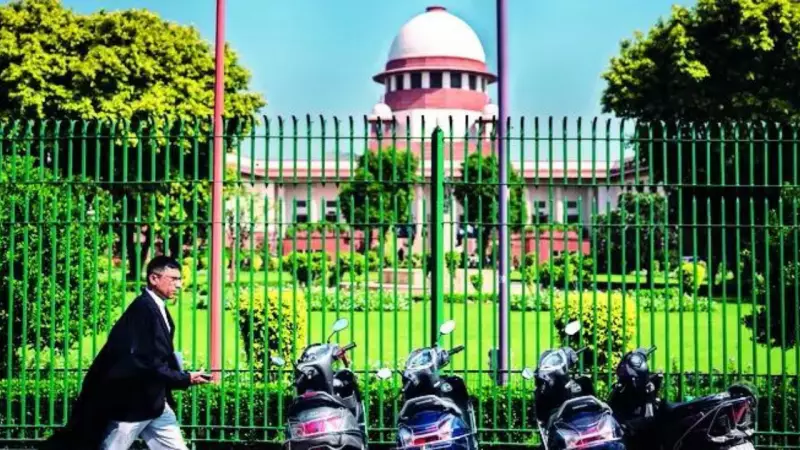
The Supreme Court of India has stepped in to examine a contentious new law that grants unprecedented legal protection to the country's top election officials. On Monday, a bench led by Chief Justice Surya Kant issued formal notices to the central government and the Election Commission of India, demanding their responses to a petition challenging the validity of the legislation.
Court Takes Suo Motu Cognizance, Will "Examine" the Law
During the hearing, the bench made its intent clear. Chief Justice Surya Kant stated, "We would like to examine it. We are issuing notice." This move indicates the apex court's serious consideration of the constitutional questions raised by the petitioner. The plea specifically targets a provision within The Chief Election Commissioner and Other Election Commissioners (Appointment, Conditions of Service and Term of Office) Bill, 2023.
Unprecedented Immunity for Constitutional Functionaries
The core of the challenge lies in the sweeping immunity clause. The petitioner's counsel argued that the enacted law provides life-long immunity from both civil and criminal prosecution to the Chief Election Commissioner (CEC) and Election Commissioners (ECs). This protection covers any act performed in the discharge of their official duties.
The petition makes a powerful comparative argument, highlighting that this shield is more extensive than what was envisioned by the framers of the Constitution for other high offices. "The Bill cannot give life long unprecedented immunity to CEC and EC which makers of Constitution didn’t even grant to the judges," the counsel contended. The argument underscores that Parliament, in the petitioner's view, overstepped by granting a protection that the Constitution's authors deliberately withheld from other dignitaries.
Implications for Electoral Integrity and Accountability
The Supreme Court's decision to hear this plea puts a spotlight on the balance between protecting election officials from undue harassment and ensuring they remain accountable for their actions. The grant of absolute, life-long immunity is a first in Indian law for such constitutional posts. Legal experts are watching closely, as the court's final ruling could have profound implications for the autonomy and accountability framework of the Election Commission of India, a body pivotal to the world's largest democracy.
The Centre and the Election Commission now have time to file their detailed counter-responses. The Supreme Court's examination will likely delve into whether such blanket immunity aligns with the basic structure of the Constitution and the principles of democratic accountability.