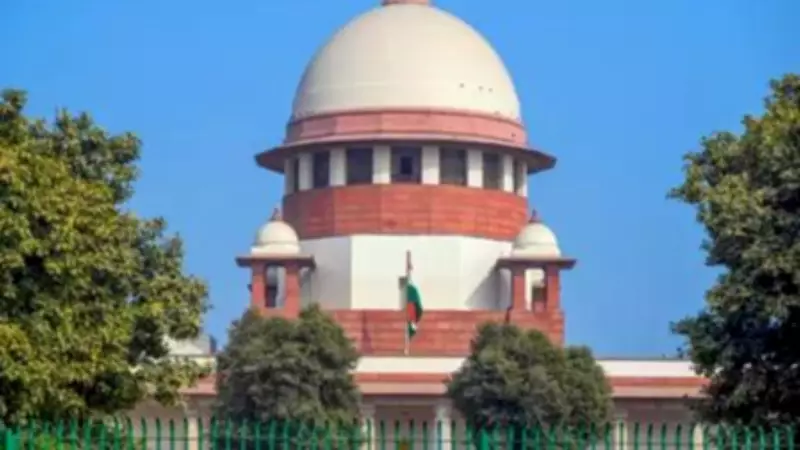
Supreme Court Rebukes Government Over Unnecessary Litigation, Imposes Financial Penalty
In a sharp rebuke to the central government, the Supreme Court of India has criticized the administration for clogging the judicial system with frivolous appeals. The apex court imposed a significant cost of Rs 25,000 on the government for challenging a well-reasoned order from the Punjab and Haryana High Court.
Case Background: CISF Official's Termination Overturned
The controversy centers on a CISF official who was terminated from his position in 2010. The government cited misconduct as grounds for dismissal, specifically alleging unauthorized absence from duty and involvement in helping a couple elope. According to the termination order, the official had allegedly assisted the daughter of a CISF constable in eloping and marrying his friend at an Arya Samaj Mandir.
Following his dismissal, the official sought legal recourse through the Punjab and Haryana High Court. The high court carefully examined the case and ultimately ruled in his favor, directing his reinstatement with 25% back wages. Dissatisfied with this outcome, the central government filed an appeal with the Supreme Court, seeking to overturn the high court's decision.

Judicial Frustration with Government Litigation Practices
During the hearing on Wednesday, a bench comprising Justices B V Nagarathna and Ujjal Bhuyan expressed strong disapproval of the government's decision to pursue this appeal. The justices questioned why the government had chosen to challenge the high court's well-reasoned order, particularly when the termination appeared disproportionate to the alleged misconduct.
The bench delivered a pointed critique of government litigation practices, stating: "We keep shouting pendency, pendency. Who is the biggest litigant? The high court granted him relief. Instead of giving an opinion that you will not go to the Supreme Court, you still proceed against him. We fail to understand as to why the Union of India and others have approached this court to assail the HC order."
This statement highlights the court's frustration with what it perceives as unnecessary litigation contributing to India's massive case backlog. The justices emphasized that governments at various levels have been significant contributors to the ever-increasing pendency of cases by filing unnecessary appeals like the present one.
Court Rejects Government's Arguments, Upholds High Court Decision
The government attempted to justify its position by arguing that the case involved gross indiscipline, as the CISF official had allegedly facilitated the elopement of a young woman. However, the Supreme Court found these arguments unconvincing and upheld the high court's original decision.
The apex court noted that the high court had properly considered all relevant facts, including the woman's recorded statement indicating she had married voluntarily as an adult. The high court had specifically stated: "Her statement has been recorded and reflects that she got married at her own volition and she was an adult on the date of her marriage. The said charge hence does not survive."
Given these circumstances, the Supreme Court determined that the government's appeal lacked merit and represented exactly the type of unnecessary litigation that contributes to judicial backlog. The bench declared it a fit case for imposing a financial penalty, resulting in the Rs 25,000 cost levied against the government.
Broader Implications for Judicial Efficiency
This ruling carries significant implications beyond the specific case of the reinstated CISF official. By publicly criticizing the government's litigation practices and imposing financial consequences for unnecessary appeals, the Supreme Court is sending a clear message about judicial efficiency.
The court's comments highlight a systemic issue where government entities frequently pursue appeals even when lower courts have provided well-reasoned decisions. This practice not only burdens the judicial system but also delays justice for other litigants awaiting their day in court.

Legal experts suggest this ruling may encourage government agencies to exercise greater discretion before filing appeals, particularly in cases where lower court decisions appear reasonable and well-founded. The financial penalty, while modest, serves as a symbolic reminder that unnecessary litigation has consequences beyond mere case statistics.
As India continues to grapple with massive judicial pendency, this Supreme Court decision represents an important step toward holding all parties—including government entities—accountable for their role in either alleviating or exacerbating the problem. The ruling reinforces the principle that judicial resources should be reserved for cases of genuine legal significance rather than routine challenges to reasonable lower court decisions.