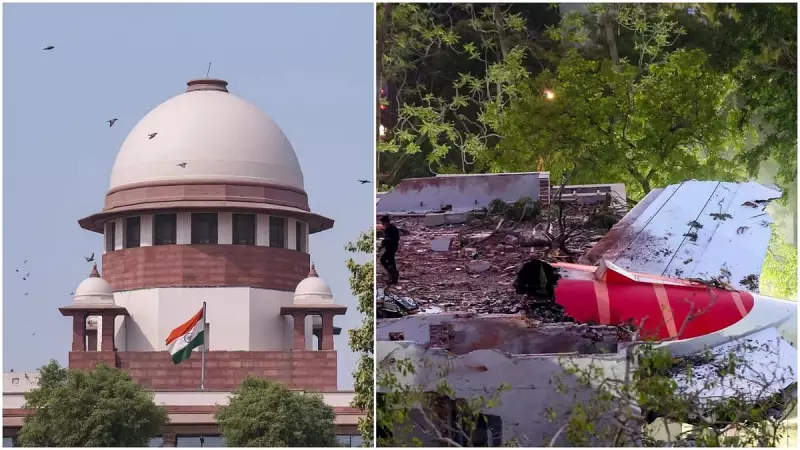
In a landmark judgment that has sent ripples through India's aviation sector, the Supreme Court has officially exonerated the pilot of the ill-fated Air India Express Flight IX-812 from blame for the tragic 2010 Mangalore crash that claimed 158 lives.
The Tragic Morning That Shook the Nation
On May 22, 2010, Air India Express Flight IX-812 from Dubai to Mangalore met with a catastrophic end when it overshot the runway during landing at Mangalore International Airport. The Boeing 737-800 aircraft crashed through the airport's boundary wall, plunged down a hillside, and burst into flames. Of the 166 people on board, 158 passengers and crew perished, while only eight miraculously survived with injuries.
The flight was commanded by Captain Zlatko Glusica, a Serbian-born British national with extensive flying experience, alongside his Indian co-pilot Captain H.S. Ahluwalia. The court documents revealed that Captain Glusica had accumulated approximately 10,200 hours of total flying experience, including substantial time on Boeing 737 aircraft.

Supreme Court's Groundbreaking Verdict
The Supreme Court bench, comprising Justice Abhay S. Oka and Justice Ujjal Bhuyan, delivered a comprehensive judgment that shifted the blame from individual pilot error to broader systemic issues. The court meticulously examined the evidence and concluded that the pilot could not be held solely responsible for the tragic outcome.
In their ruling, the justices emphasized that "the accident was the result of a complex interplay of factors rather than simple pilot error." The court noted several critical aspects that contributed to the disaster, including the challenging nature of the Mangalore airport's tabletop runway, adverse weather conditions, and possible limitations in the aircraft's safety systems.
Broader Implications for Aviation Safety
This verdict marks a significant departure from the initial investigation reports that had primarily pointed toward pilot error. The Supreme Court's judgment highlights the importance of considering the complete ecosystem in which aviation operations occur, rather than focusing exclusively on the human element during accident investigations.
The ruling has sparked important conversations within India's aviation community about systemic improvements in airport infrastructure, enhanced pilot training for challenging airport approaches, and the need for comprehensive safety audits at airports with difficult terrain.
Legal experts suggest this judgment could set a precedent for how aviation accidents are investigated and litigated in India, potentially leading to more holistic approaches that consider multiple contributing factors rather than seeking to assign blame to individual operators.
As India continues to expand its aviation infrastructure and passenger numbers grow exponentially, this Supreme Court ruling serves as a crucial reminder that aviation safety requires a multi-layered approach where infrastructure, training, systems, and human factors all receive equal attention in the pursuit of accident prevention.