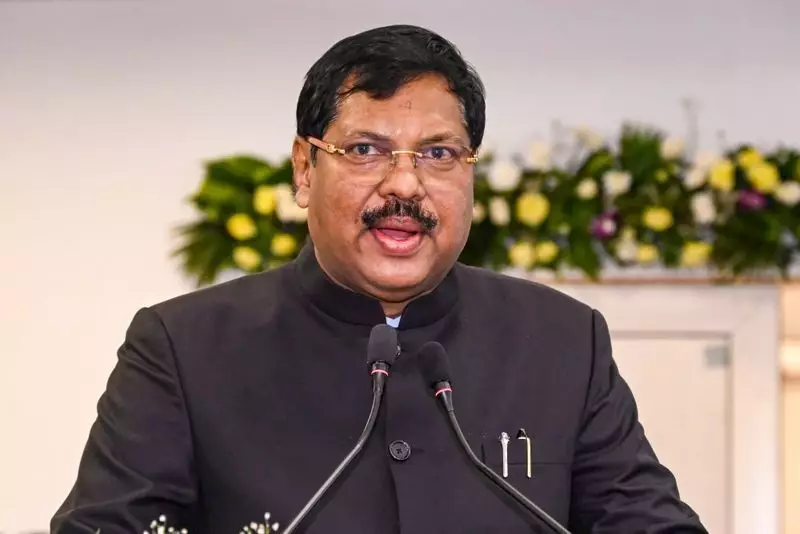
In a significant statement that clarifies the Indian judiciary's approach to economic governance, Chief Justice of India BR Gavai has emphasized that the Supreme Court typically refrains from interfering in policy matters involving economic considerations. This important declaration came during court proceedings that highlight the delicate balance between judicial oversight and executive decision-making.
The Context of Judicial Restraint
The Supreme Court's position was articulated while addressing a petition concerning the acquisition of land in Maharashtra's Raigad district for the Mumbai-Pune Expressway. The case involved challenging the compensation awarded to landowners, bringing to the forefront the court's established principle of non-interference in policy domains.
Chief Justice Gavai, heading a bench that also included Justice Sandeep Mehta, made it clear that when policy decisions carry economic implications, the judiciary exercises considerable restraint. This approach recognizes that economic policy formulation falls primarily within the executive's domain, with courts intervening only in exceptional circumstances where constitutional principles are violated.
Land Acquisition Case Details
The specific case that prompted this judicial clarification involved the Maharashtra State Road Development Corporation's (MSRDC) acquisition of land for the Mumbai-Pune Expressway. Landowners had approached the Supreme Court challenging the compensation awarded for their acquired properties.
During the proceedings, the bench noted that the acquisition process began in 1997-1998, making it a decades-old matter. The court emphasized that it couldn't examine the policy decision to acquire the land itself, as such determinations involve complex economic considerations that fall outside judicial purview.
However, the court did provide some relief to the petitioners by permitting them to approach the appropriate authority regarding their compensation grievances. This balanced approach demonstrates the judiciary's method of addressing individual rights without overstepping into policy domains.
Broader Implications for Governance
The Supreme Court's consistent position on this matter has significant implications for India's governance structure. By maintaining this boundary, the judiciary acknowledges that elected representatives and administrative experts are better positioned to make complex economic decisions that affect national development and public welfare.
This principle of judicial restraint particularly applies to infrastructure projects, economic reforms, and development initiatives where specialized knowledge and macroeconomic considerations play crucial roles. The court's approach ensures that policy makers can implement economic strategies without undue judicial interference, while still maintaining constitutional safeguards.
Legal experts note that this position strengthens the separation of powers doctrine enshrined in the Indian Constitution. It prevents the judiciary from becoming a super-legislature or parallel executive, thereby preserving the distinct roles of each branch of government.
Historical Consistency in Judicial Approach
The current stance articulated by Chief Justice Gavai continues a long-standing judicial tradition. The Supreme Court has historically exercised caution when dealing with matters involving economic policy, recognizing that such decisions often require balancing multiple competing interests and specialized expertise.
This approach doesn't mean complete judicial abdication. The courts remain willing to intervene when policies violate fundamental rights, demonstrate arbitrariness, or exceed constitutional boundaries. However, in matters purely involving economic wisdom, the judiciary typically defers to the elected government's decision-making.
The position gains particular significance in contemporary India, where rapid economic development and infrastructure projects frequently raise legal challenges. By maintaining this balanced approach, the judiciary supports economic growth while protecting constitutional values.
As India continues its development journey, this judicial philosophy ensures that economic policy decisions remain with accountable elected representatives while providing necessary checks against constitutional violations. The Supreme Court's position thus represents a mature understanding of institutional roles in a developing democracy.