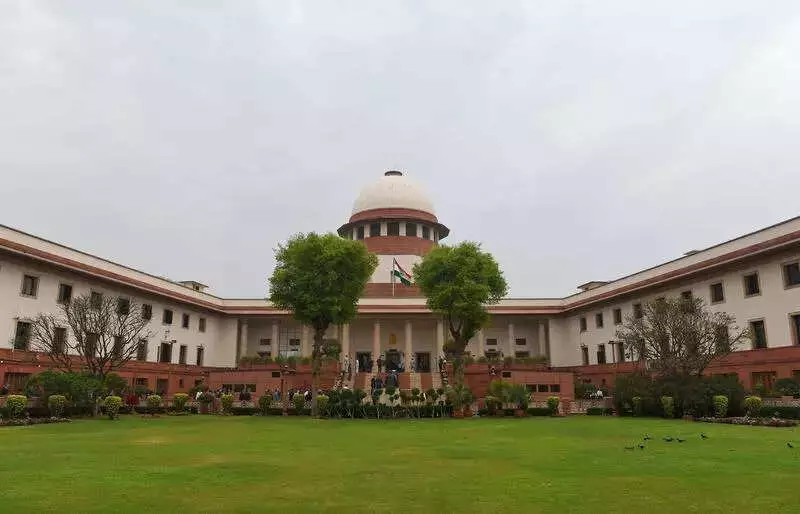
Supreme Court Upholds Transfer of Punjab Sacrilege Cases to Chandigarh
In a significant legal development, the Supreme Court of India has dismissed four petitions that challenged the transfer of sacrilege-related cases from three districts in Punjab to Chandigarh. This decision reinforces the judicial process aimed at ensuring fair trials in these sensitive matters.
Background of the Petitions
The petitions were filed by Sewak Singh, Gurcharan Singh, Iqbal Singh, and Sukhdev Singh, who are primarily followers of Dera Sacha Sauda. They had filed separate Special Leave Petitions (SLPs) against the Punjab and Haryana High Court's order dated March 17, 2025. This order allowed for the transfer of trials in sacrilege cases from Moga, Faridkot, and Bathinda districts to a competent court in the Union Territory of Chandigarh, scheduled for March 2025.
Sewak Singh from Moga initiated the legal challenge by filing an SLP in the Supreme Court on September 1, 2025, without waiting for the Punjab government to contest the High Court's decision. He argued that while Dera followers freely conduct their programs in Punjab, they face an uncongenial atmosphere when it comes to trials in sacrilege cases, citing security concerns.
Details of the Cases and Petitioners
The sacrilege cases in question date back to 2015 and 2016, involving incidents that have sparked widespread controversy and protests in Punjab. Following Sewak Singh, other petitioners filed their SLPs:
- Sukhdev Singh filed in a case registered at Dyalpura Police Station in Bathinda on June 26, 2016.
- Iqbal Singh from Gurusar filed in a case registered at Dyalpura Police Station in Bathinda on October 20, 2015.
- Gurcharan Singh from Bhagta Bhai Ka filed in a case where the trial was in Faridkot, registered on July 3, 2016.
Earlier, a Moga court had sentenced three accused to three-year imprisonment each on July 7, 2022, a decision that was subsequently challenged in a higher court, adding to the legal complexities.
Supreme Court Proceedings and Order
The bench of the Supreme Court, comprising Justice Sanjay Karol and Justice Augustine George Masih, heard the petitions and dismissed them on Friday. The court also directed the Punjab government to review the security provided to the accused, as they had raised concerns about threats to their lives during trials in Punjab. With the High Court's transfer order upheld, this security review becomes pertinent.
During the proceedings, the defence counsels highlighted that the petitioners had previously approached the Supreme Court in 2019 with transfer petitions, which were dismissed on November 25, 2020. At that time, the state had undertaken to make "foolproof arrangements" and provide security. However, the counsels argued that circumstances deteriorated thereafter, with three murders occurring in the past three years involving persons related to similar FIRs in alleged sacrilege incidents. They stressed that constant threats hindered the petitioners' ability to ensure a fair and transparent trial.
Historical Context and Previous Transfers
This is not the first instance of sacrilege cases being transferred to Chandigarh. Earlier, cases from Bargari and Burj Jawahar Singh Wala villages in Faridkot, as well as the firing incident at Behbal Kalan village in Faridkot where two Sikhs were killed during a protest against sacrilege on October 14, 2015, were also moved to Chandigarh. These transfers were part of efforts to address security and fairness concerns in high-profile cases.
Senior advocate HS Phoolka noted that while the four SLPs were filed by petitioners against the High Court orders, the Punjab government did not challenge the order, indicating a nuanced stance in the legal battle.
Implications and Next Steps
The Supreme Court's dismissal of the petitions means that the transfer of cases to Chandigarh will proceed as planned, with trials set to begin in March 2025. The court has ordered the parties to maintain status quo and issued notices returnable on January 23, asking respondents to file counter-affidavits and replies to interlocutory applications. This step ensures that all legal formalities are addressed before the trials commence.
This ruling underscores the judiciary's commitment to upholding the rule of law while balancing security concerns in sensitive cases. It also highlights the ongoing challenges in handling sacrilege-related matters in Punjab, where emotions and legal intricacies often intertwine.