Supreme Court Mandates Public Display of Names in Bengal Voter Roll Scrutiny
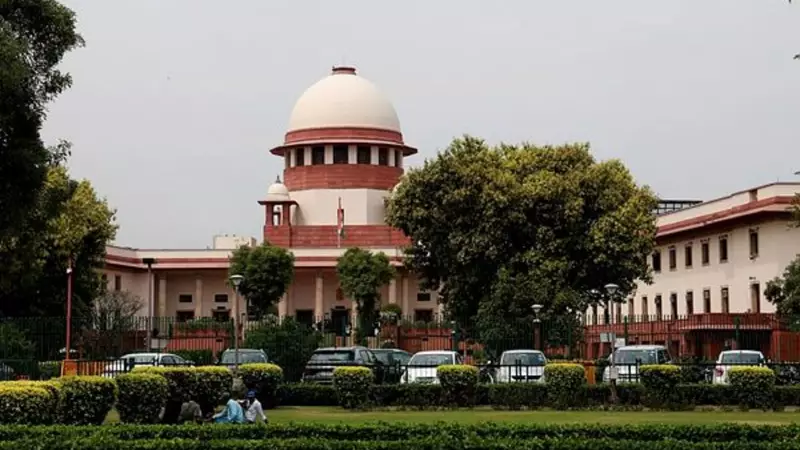
The Supreme Court of India has issued a significant directive to the Election Commission. It requires the public display of names flagged for "logical discrepancies" during the Special Intensive Revision of electoral rolls in West Bengal. This move aims to enhance transparency in the voter verification process.
Court's Directive for Transparency
On Monday, a three-judge bench led by Chief Justice Surya Kant delivered this order. The bench included Justices Dipankar Datta and Joymalya Bagchi. They emphasized that the scrutiny exercise must be conducted transparently. It should not cause undue inconvenience to voters.
The court specifically instructed the Election Commission to display the names of flagged individuals. These names must be posted at gram panchayat bhavans and block offices in every taluka. In urban areas, they should be displayed at ward offices. This ensures local accessibility for all affected voters.
Background of the Hearing
The bench was hearing applications filed by TMC MP Dola Sen and others. These applications concerned the Special Intensive Revision in West Bengal. While the court refused to halt the scrutiny process, it laid down clear guidelines to protect voter rights.
Chief Justice Surya Kant stated, "On the face of it, some correction exercise has to be undertaken. But it must be transparent, with ample opportunity, without inconvenience to the voters." This statement underscores the court's commitment to fair electoral practices.
Procedural Safeguards for Voters
The court outlined several procedural safeguards. Affected individuals should be permitted to submit documents or objections. They can do this through an authorized representative, such as a Booth Level Agent. These submissions must be made at the designated panchayat bhavans or block offices.
The Election Commission must issue instructions allowing submission within ten days of the names being published. Officials are required to certify receipt of these documents. This certification will serve as proof of submission for the electors.
State Support and Manpower
The Supreme Court also directed the West Bengal state government. It must provide adequate manpower to the Election Commission and State Election Commission. This staff will be deployed at panchayat bhavans and block offices. Their role is to entertain documents, objections, and conduct hearings for affected persons.
The court further instructed District Collectors and Superintendents of Police. They must meticulously comply with directions from the Election Commission and state government. This ensures smooth deployment of staff and force for the process.
Acceptance of Admit Cards
During the hearing, the court made important verbal remarks regarding documentation. It stated that the Election Commission should accept Class 10 admit cards, not just report cards. Justice Bagchi noted that admit cards are among the eleven documents listed by the EC as qualifying for enumeration.
Justice Datta added, "The West Bengal State Board of Education marks the date of birth in the admit card, not in the pass certificate. If you insist only on the pass certificate, that will not bear the date of birth. For that, you will have to allow the admit card." This clarification aims to prevent unnecessary hurdles for voters.
Legal Arguments and Concerns
Senior Advocate Kapil Sibal, representing some TMC leaders, raised concerns. He mentioned notices issued for age differences between electors and their parents or grandparents. He also pointed out discrepancies in name spellings. Sibal urged the EC to publish all names in the logical discrepancies category, which the court agreed to.
In response, Senior Advocate Rakesh Dwivedi, appearing for the EC, clarified that entire names were different, not just spellings. He stated, "There is a specific direction that no notice be issued if there is simply a spelling error."
Justice Bagchi questioned the logic behind flagging age gaps. He remarked, "How can that be a logical discrepancy...We are not in a country where there is no child marriage." Dwivedi explained that such differences might be errors requiring correction on the roll.
Representation and Hearings
Sibal also advocated for allowing Booth Level Agents to attend hearings. Justice Bagchi supported this, saying, "Why can't they be allowed in the hearing? A next of friend can always be." However, Dwivedi expressed concerns about potential chaos and clashes if every BLA were allowed, given multiple parties involved.
He clarified that individuals submitting documents can appoint a representative, who may be a BLA. This balances representation with procedural order.
Scale and Timing of the Scrutiny
The court addressed the scale of the scrutiny, with over one crore electors initially issued notices. Chief Justice Surya Kant noted that this was just an initial figure, likely to drop. He referenced a similar situation in Bihar, where initial apprehensions of 60-65 lakh voters disappearing did not materialize.
Senior Advocate Shyam Divan, appearing for some petitioners, questioned the criteria for "logical discrepancies." He argued, "This kind of profiling on a criteria which you just invent is most undesirable. Where do these criteria come from? Who is discovering these criteria?"
Sibal questioned the timing, asking, "Why do this now, in the midst of an election? It can be done at any time." In response, the Chief Justice clarified, "Let's take it like this. This criterion is not for the purpose of deleting voters, but only for the purpose of rectifying the errors."
The Supreme Court's directives aim to ensure a fair and transparent voter roll revision process in West Bengal. By mandating public display and providing clear procedural safeguards, the court seeks to protect voter rights while allowing necessary corrections.