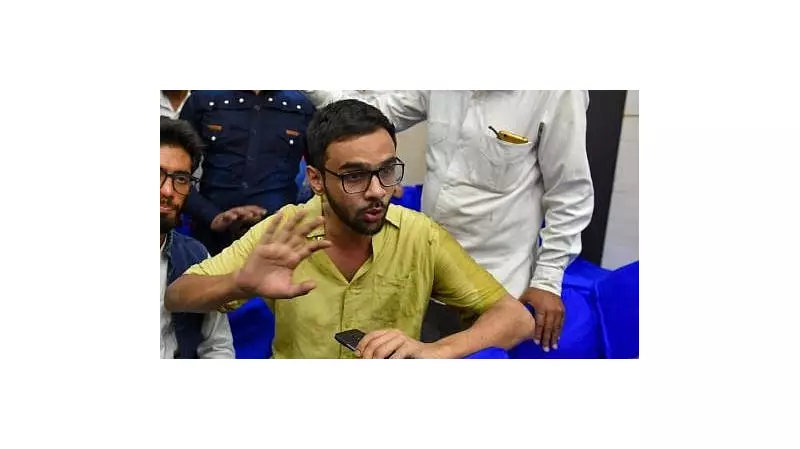
In a significant legal development, the Supreme Court of India has dismissed the bail application of former Jawaharlal Nehru University student activist Umar Khalid. The apex court upheld the charges framed against him under the stringent Unlawful Activities (Prevention) Act in connection with the larger conspiracy behind the February 2020 Delhi riots.
The Supreme Court's Verdict and Reasoning
A bench comprising Justices Bela M. Trivedi and Pankaj Mithal delivered the verdict on Wednesday, October 9, 2024. The court found no grounds to interfere with the earlier orders of the Delhi High Court and the trial court, which had also denied him bail. The bench stated that the allegations against Khalid, as per the chargesheet, were prima facie true and serious in nature.
The judges emphasized that at the bail stage, they could not conduct a mini-trial or examine the evidence in granular detail. Their role was limited to assessing if the lower courts had exercised their discretion in a perverse or arbitrary manner. The Supreme Court concluded that the findings of the courts below were neither perverse nor arbitrary and thus required no intervention.

Details of the Allegations and Charges
Umar Khalid has been in judicial custody since September 2020. He is one of the key accused in a case registered by the Delhi Police's Special Cell, alleging a larger conspiracy to incite communal violence during the protests against the Citizenship Amendment Act (CAA). The violence in North-East Delhi resulted in the deaths of over 50 people and left hundreds injured.
The prosecution's case, under the UAPA and various sections of the Indian Penal Code, alleges that Khalid was part of a pre-meditated plot to destabilize the law and order situation in the national capital. The chargesheet references a speech he delivered in Amravati, Maharashtra, in February 2020, which investigators claim was part of the conspiratorial communication aimed at mobilizing crowds.
The trial court had formally framed charges against Khalid and others in May 2023. The Supreme Court's ruling now paves the way for the trial to proceed on the basis of these framed charges.
Legal Implications and Future Course
This verdict reinforces the high legal threshold for securing bail under the UAPA, where the court's satisfaction regarding the prima facie truth of the allegations plays a crucial role. The dismissal of the bail plea means Khalid will remain in custody as the trial continues in the Delhi court.
The decision is expected to have a bearing on the bail pleas of other co-accused in the same case. It underscores the judiciary's current approach to cases involving charges under anti-terror laws, where the nature of the alleged offense often outweighs considerations of prolonged incarceration without a conviction.
Legal experts point out that the focus now shifts entirely to the trial process, where the evidence will be tested in detail. The defense will have the opportunity to counter the prosecution's narrative and evidence comprehensively. However, with bail denied, the proceedings will continue with the accused in custody, highlighting the challenging path ahead for the defense in this high-profile case.