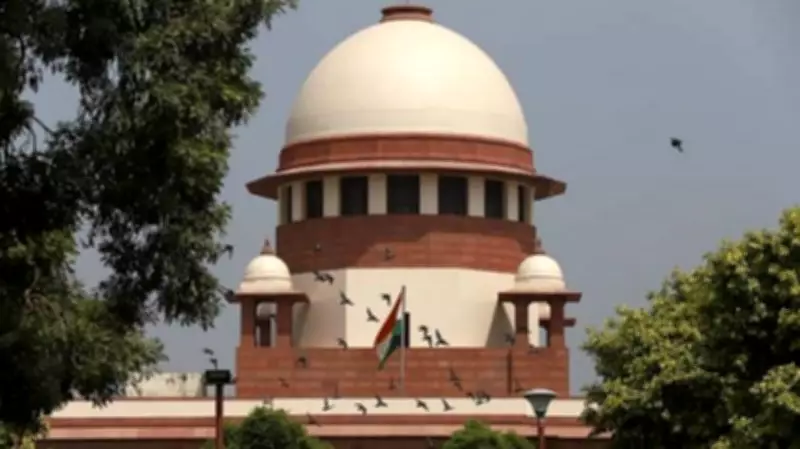
The Supreme Court on Monday set aside the pre-arrest bail granted to a Tamil Nadu police officer accused of sexually harassing a law student. A bench of Justices B.V. Nagarathna and Prashant Kumar Mishra held that the Madras High Court's decision to grant anticipatory bail merely because departmental proceedings had already been initiated against the officer was unsustainable in law.
Background of the Case
The case pertains to allegations of sexual harassment made by a female law student against a Tamil Nadu police officer. The complainant alleged that the officer subjected her to unwelcome advances and inappropriate behavior during the course of her academic activities. The incident reportedly occurred at a government building where the student was present for a legal proceeding.
High Court's Order
The Madras High Court had earlier granted pre-arrest bail to the officer, citing that departmental action had already been initiated and that custodial interrogation was not necessary. The high court also observed that the officer had cooperated with the investigation and that no prima facie case of harassment was made out against him.

Supreme Court's Observations
The Supreme Court bench, however, disagreed with the high court's reasoning. The apex court noted that the gravity of the allegations and the need for a fair investigation cannot be undermined by the initiation of departmental proceedings. The court emphasized that pre-arrest bail should not be granted as a matter of routine, especially in cases involving sexual harassment where the accused holds a position of power.
The bench further stated that the high court had failed to consider the serious nature of the allegations and the potential for the accused to influence witnesses or tamper with evidence. The Supreme Court's decision underscores the principle that anticipatory bail is an extraordinary remedy and should be granted only in exceptional circumstances.
Legal Implications
The ruling has significant implications for cases involving sexual harassment, particularly those where the accused is a public servant. The Supreme Court's judgment reinforces the need for courts to conduct a thorough assessment of the facts and circumstances before granting pre-arrest bail. Legal experts believe that this decision will serve as a deterrent against the misuse of anticipatory bail provisions in sensitive cases.
The Supreme Court also directed the Tamil Nadu police to complete the investigation into the matter within a period of three months. The court further ordered that the officer shall cooperate with the investigation and appear before the investigating officer as and when required.