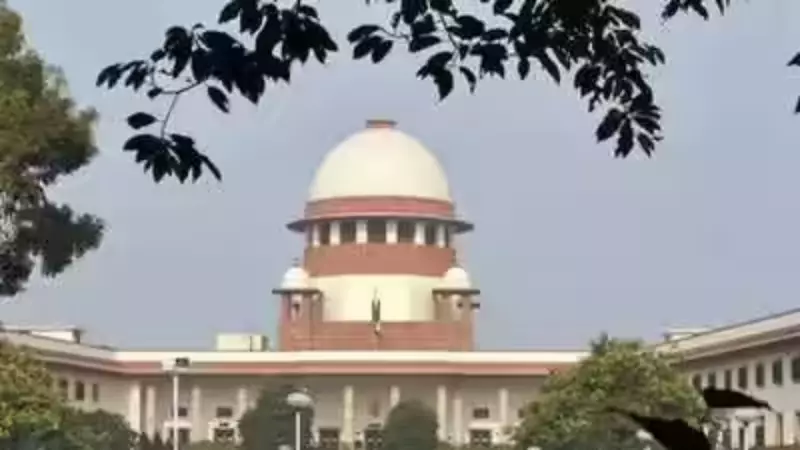
The Supreme Court of India delivered a strong rebuke on Monday. It blocked the path for reinstating a Madhya Pradesh judicial officer. This officer had created a disturbance inside a train. He allegedly urinated on the seat of a female co-passenger.
Supreme Court Stays High Court Order
The apex court termed the actions as disgusting. It called it the grossest misconduct. The bench stayed an order from the Madhya Pradesh High Court. That order had set aside the officer's termination. It had directed his reinduction into service.
Justice Vikram Nath and Justice Sandeep Mehta presided over the bench. They expressed shock at the case. "This is a shocking case. You urinated in the compartment. There was a lady... It is disgusting," the bench stated clearly. The justices showed surprise. They questioned how the High Court could pass an order in favor of the officer after such public behavior.

High Court Administration Challenges Its Own Order
Interestingly, the Madhya Pradesh High Court administration itself approached the Supreme Court. It challenged the order passed by its own judicial side. Advocate Divyakant Lahoti filed the petition for the administration.
The petition detailed the incident. It said the judicial officer "indulged in an extremely indecent conduct." He urinated on the seat of a female co-passenger. He exposed his private parts. The petition stated this act was unbecoming of a judge.
The High Court administration had terminated his job earlier. This action followed recommendations from the administrative committee and a full court reference. However, the officer challenged this termination on the judicial side. A division bench then set aside the termination order, leading to the current appeal.
The 2018 Train Incident
The incident occurred in June 2018. The judge was traveling in an overnight express train. He was allegedly drunk at the time. Reports indicate he misbehaved and harassed co-passengers. He indulged in obscene actions during the journey.
Authorities arrested him following the incident. He secured bail immediately after his arrest. A criminal case was lodged against him. However, he was later acquitted in that case. Key witnesses, including the Travelling Ticket Examiner (TTE) and victim passengers, turned hostile during the trial.
Broader Implications for Judicial Integrity
The High Court administration's petition raised serious concerns. It argued the High Court erred in reinstating him. The reinstatement was based solely on his acquittal in the criminal case.
The petition warned of a damaging precedent. It stated that if such reasoning stands, judicial officers proven guilty of misconduct in departmental inquiries might evade accountability. They could simply rely on technical criminal acquittals.
Such an approach erodes the autonomy of disciplinary mechanisms. It weakens institutional discipline. The petition emphasized it risks undermining public confidence in the judiciary itself.
The preservation of judicial integrity demands proper weight for departmental findings. These findings come from a fair process based on the standard of preponderance of probabilities. Failing to honor them puts the institution's credibility in great peril, the petition concluded.
The Supreme Court's intervention highlights a firm stance. It underscores that misconduct by judicial officers, especially of this nature, cannot be overlooked. The court's stay order ensures the termination remains in effect for now, pending further legal proceedings.