

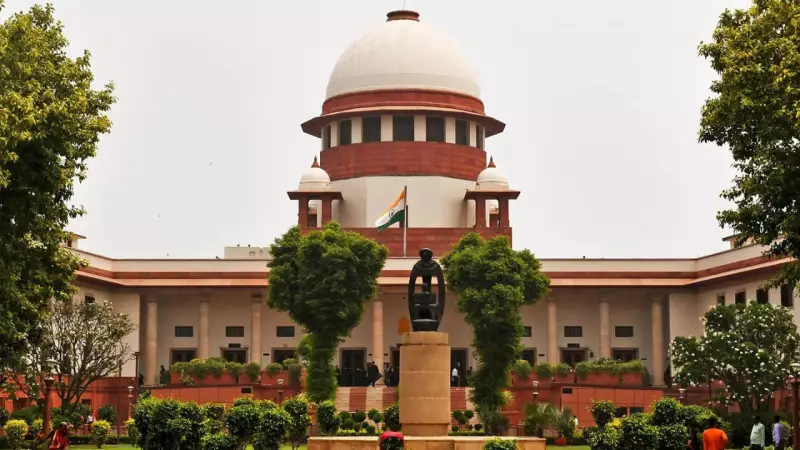
Supreme Court Delivers Strong Verdict on Army Religious Dispute
The Supreme Court of India delivered a powerful judgment on Tuesday, strongly criticizing a Christian Army soldier who refused to enter temples and gurdwaras for collective religious practices with his regiment. The apex court described his behavior as amounting to "gross indiscipline" and declared him an "absolute misfit" for military service.
The Case Background and Legal Journey
The controversy began when the soldier, whose identity remains protected, declined to follow orders requiring him to enter religious places with his unit. Following his refusal, the Army authorities took decisive action by removing him from service. The soldier then embarked on a legal battle, first approaching the Delhi High Court to challenge his termination.
However, the Delhi High Court upheld the Army's decision, stating that the soldier had placed his personal religious beliefs above the lawful command of his superiors. Unsatisfied with this outcome, the soldier escalated the matter to the Supreme Court, hoping for a different verdict.

Legal Arguments and Court's Response
During the Supreme Court proceedings, Senior Advocate Gopal Sankarnarayanan, representing the soldier, presented several key arguments in his client's defense. The lawyer emphasized that his client had maintained a clean service record for six years and only objected to activities that conflicted with his Christian faith.
The soldier's legal team argued that he specifically refused to enter the sanctum sanctorum of temples and gurdwaras because his religious convictions prohibited participation in such rituals. They maintained that this was a matter of conscience rather than insubordination.
Despite these arguments, a bench comprising Justices Surya Kant and Joymalya Bagchi remained unconvinced. The judges emphasized the paramount importance of discipline within the Army structure, noting that military personnel carry enormous responsibilities that require strict adherence to commands.
Court's Reasoning and Final Judgment
The Supreme Court bench provided detailed reasoning for their decision, highlighting that by refusing to participate in the regiment's religious activities, the soldier had effectively insulted the troops he was supposed to lead. The judges stressed that as a commander, he should have set an example for his subordinates rather than standing apart from unit traditions.
The court observed that military discipline cannot be compromised for individual religious preferences when such preferences conflict with lawful orders and regimental practices. This principle, the bench noted, forms the foundation of armed forces functionality and national security.
In their concluding remarks, the justices reinforced that the Army's decision to terminate the soldier's service was justified and necessary to maintain organizational integrity. The Supreme Court consequently rejected the soldier's appeal and confirmed his termination from military service, bringing the lengthy legal battle to a definitive close.
This judgment sets a significant precedent regarding the balance between individual religious freedom and military discipline within India's armed forces structure.






