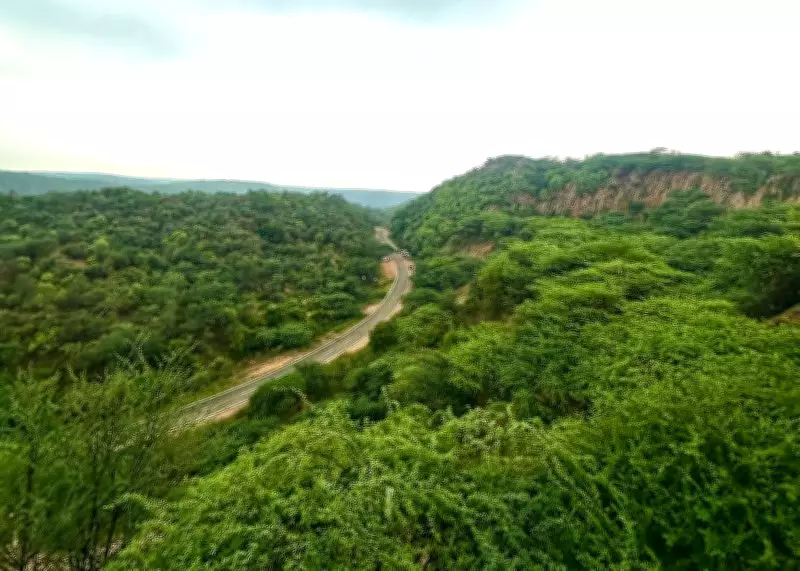
Supreme Court Calls for Expert Panel to Address Aravalli Range Issues
The Supreme Court of India has taken a proactive step in the ongoing conservation efforts for the Aravalli Range by directing the Central government and other involved parties to submit suggestions for domain experts to form a specialized panel. This move aims to tackle the complex environmental and legal challenges surrounding the protection of this critical ecological zone.
Court's Directive for Expert Recommendations
In a recent hearing, the Supreme Court emphasized the need for a multidisciplinary approach to resolve disputes related to the Aravalli Range. The bench has asked the Centre, along with state governments and other stakeholders, to propose names of experts in fields such as ecology, geology, forestry, and environmental law. This panel is expected to provide scientific and technical insights to guide judicial decisions and policy measures.
The court's order comes amid long-standing conflicts over mining activities, deforestation, and urban encroachment in the Aravalli region, which spans across states like Haryana, Rajasthan, and Delhi. By seeking expert input, the judiciary aims to ensure that conservation efforts are based on robust data and best practices, rather than solely on legal arguments.
Background of the Aravalli Conservation Row
The Aravalli Range, one of India's oldest mountain systems, has been at the center of environmental debates for decades. It plays a vital role in preventing desertification, recharging groundwater, and supporting biodiversity. However, illegal mining, land degradation, and real estate development have threatened its ecological integrity, leading to numerous court cases and public interest litigations.
Previous Supreme Court interventions have included bans on mining in certain areas and directives for afforestation, but implementation has often been hampered by jurisdictional overlaps and lack of coordination among authorities. The new expert panel is seen as a way to bridge these gaps by offering a unified, evidence-based framework for action.
Implications for Environmental Governance
This development highlights the Supreme Court's growing role in environmental governance, where it often steps in to address gaps in executive action. By mandating the formation of an expert panel, the court is not only seeking to resolve the immediate Aravalli disputes but also setting a precedent for how complex ecological issues can be managed through collaborative, knowledge-driven processes.
Stakeholders, including environmental activists and local communities, have welcomed the move, hoping it will lead to more sustainable management of the Aravalli Range. The panel's recommendations could influence future policies on land use, conservation funding, and regulatory enforcement, potentially serving as a model for other ecologically sensitive areas in India.
As the Centre and other parties prepare their suggestions, the focus remains on selecting experts with proven credentials and impartiality to ensure the panel's credibility. The Supreme Court has set a timeline for submissions, underscoring the urgency of protecting this vital natural heritage for future generations.