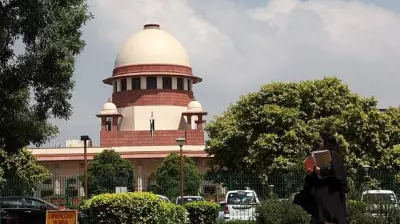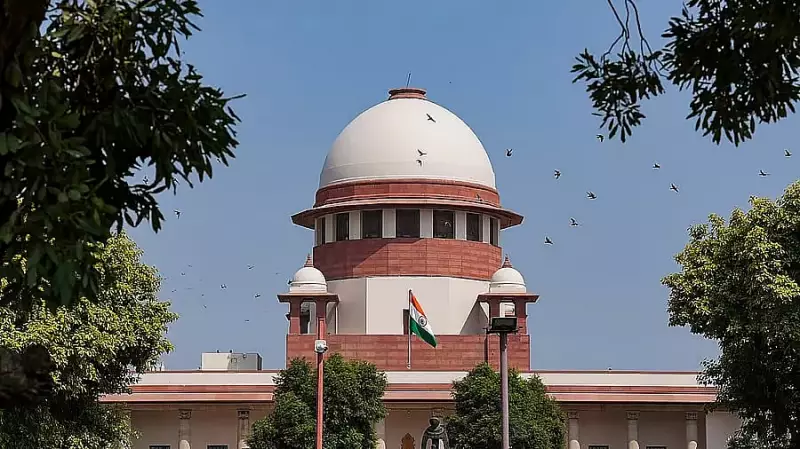
The Supreme Court of India has taken a serious step following a recent security breach, directing both the central government and the Supreme Court Bar Association (SCBA) to submit concrete suggestions aimed at preventing such incidents in the future. This move comes after an unsettling event where an individual hurled a shoe towards Chief Justice of India (CJI) DY Chandrachud while he was presiding over a hearing.
Court's Directive for Enhanced Security Protocols
A bench comprising Justices Sanjiv Khanna and Dipankar Datta issued the directive on Tuesday, July 9. The bench was hearing a petition filed by a lawyer, emphasizing the gravity of the security lapse. The court explicitly asked the Centre, represented by Attorney General R Venkataramani, and the SCBA, represented by its President Adish C Aggarwala, to propose specific and actionable measures.
The primary goal is to fortify security within court premises, particularly in courtrooms and the corridors of the Supreme Court. The bench stressed that the suggestions must be practical and focused on preventing any similar acts of disrespect or potential threat towards judges. The court has scheduled the next hearing for July 16, by which time both parties are expected to submit their written proposals.
Details of the Security Breach Incident
The incident that triggered this judicial response occurred on July 8. A man, identified as Ramesh Kumar Sharma, threw a shoe in the direction of CJI Chandrachud's bench during a court proceeding. Fortunately, the shoe did not hit anyone. Sharma was immediately overpowered by security personnel and lawyers present in the courtroom.
Following the act, Sharma was taken into custody. Preliminary reports suggest he was agitated over certain personal matters. The Delhi Police have registered a case against him under relevant sections of the Indian Penal Code. This event has sparked widespread concern within the legal fraternity about the vulnerability of even the highest judicial offices to such public disruptions.
Broader Implications for Judicial Safety and Sanctity
This is not an isolated incident in India's judicial history, which makes the Supreme Court's proactive stance crucial. Past episodes have seen similar acts of protest or disruption targeting judges. The current petition and the court's subsequent orders highlight an urgent need to review and upgrade security protocols to match the evolving nature of threats.
The involvement of both the executive (through the Centre) and the representatives of lawyers (the SCBA) indicates a collaborative approach to problem-solving. The court seeks to balance robust security with the fundamental principle of keeping the judiciary accessible to the public. The measures suggested are likely to examine access control, screening procedures, and behavioral monitoring within court complexes without creating an overly restrictive environment.
The outcome of this process, expected to unfold in the coming weeks, could set a significant precedent for security standards across all courts in India. It underscores the judiciary's commitment to safeguarding its dignity and the safety of its members while maintaining the open and fair nature of judicial proceedings.