

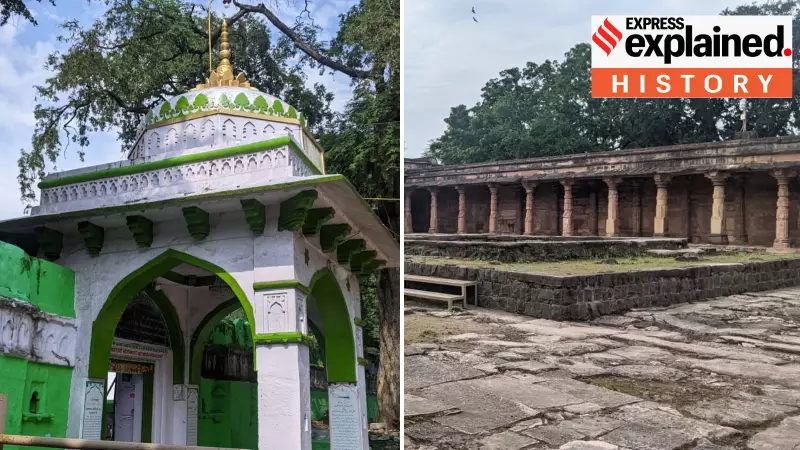
Supreme Court Directs Simultaneous Prayers at Bhojshala on Basant Panchami
The Supreme Court of India has issued a landmark order on Thursday, January 22, 2026, allowing simultaneous Basant Panchami puja and namaz at the Archaeological Survey of India-protected Bhojshala Temple and Kamal Maula Mosque complex in Dhar district, Madhya Pradesh. This decision comes in response to a plea by the Hindu Front for Justice, marking a significant development in the decades-long dispute over the 11th-century monument.
Historical Context of the Bhojshala Dispute
Since the early 2000s, various right-wing groups have actively campaigned for the closure of the mosque, a ban on Friday namaz, and the installation of a Saraswati idol within the complex. The issue gained political traction during the run-up to the 2003 Madhya Pradesh Legislative Assembly elections, where the "liberation" of Bhojshala became a major electoral point, contributing to the ouster of the Congress government led by Digvijaya Singh.
In April 2003, the ASI attempted to mediate by establishing a schedule where Hindus could perform puja on Tuesdays and Muslims could offer namaz on Fridays. However, this arrangement was challenged in a Public Interest Litigation filed by the Hindu Front for Justice on May 2, 2022, which argued for daily worship rights for Hindus, citing historical claims that a Saraswati statue was installed there in 1034 and later taken to London by the British in 1857.

Archaeological and Historical Insights
The Madhya Pradesh High Court ordered an ASI survey in 2024 to clarify the nature and character of the site. The subsequent report indicated that the existing structure was constructed using parts from earlier temples, fueling debates over its origins. Research by scholars like Michael Willis highlights that the term "Bhojshala" or 'Hall of Bhoja' refers to a centre for Sanskrit studies associated with King Bhoja of the Paramara dynasty, but its identification with the mosque has been a source of tension since the early 20th century.
Willis notes in his research that the mosque, built adjacent to the tomb of Kamal al-Din Chishti, incorporates reused temple materials, not merely as a practical solution but as a symbolic appropriation of past cultural resources. This has led to conflicting interpretations, with some groups asserting it as a temple dedicated to Goddess Saraswati, while others recognize its Islamic heritage.
Political and Social Implications
The dispute has repeatedly flared up, with right-wing groups attempting to enter the complex and hoist saffron flags, leading to police interventions and curfews, notably in 1997 when the Vishwa Hindu Parishad threatened such actions. In 2003, then BJP MP Shivraj Singh Chouhan criticized the state government for restricting Hindu access, and in 2022, his government pledged to retrieve the Saraswati idol from the British Museum.
This Supreme Court order for simultaneous prayers on Basant Panchami, a day celebrating the arrival of spring and worship of Saraswati, represents a delicate balance in managing religious sentiments. It underscores the ongoing challenges in preserving historical sites while addressing communal claims, with potential implications for future legal and political discourse in Madhya Pradesh and beyond.






