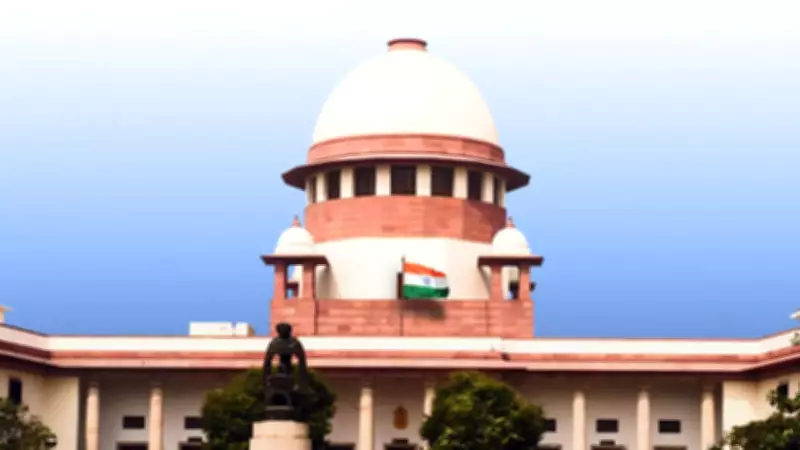
Supreme Court Warns AI-Generated Fake Judgments Constitute Judicial Misconduct
The Supreme Court of India issued a stern warning on Monday, stating that judicial orders based on artificial intelligence-generated, non-existent judgments will be treated as misconduct rather than a simple error in decision-making. This declaration highlights serious concerns over the increasing use of AI in court proceedings, which could undermine the integrity of the legal system.
Bench Takes Cognisance and Issues Notices
A bench comprising Justices PS Narasimha and Alok Aradhe announced that it will examine the issue in detail. The court has issued notices to Attorney General R Venkataramani, Solicitor General Tushar Mehta, and the Bar Council of India. Additionally, senior advocate Shyam Divan has been appointed to assist the court in this matter, as reported by PTI.
In its order dated February 27, the bench emphasized, "We take cognisance of the trial court deploying AI-generated non-existing, fake or synthetic alleged judgments and seek to examine its consequences and accountability as it has a direct bearing on the integrity of the adjudicatory process."
Misconduct with Legal Consequences
The bench further clarified, "At the outset, we must declare that a decision based on such non-existent and fake alleged judgments is not an error in the decision making. It would be a misconduct and legal consequences shall follow. It is compelling that we examine this issue in more detail." This strong stance underscores the court's commitment to maintaining judicial standards and preventing the misuse of technology in legal processes.
Origin of the Issue
The matter arose during the hearing of a plea challenging a January order from the Andhra Pradesh High Court. The case involved a suit seeking an injunction, where the Supreme Court noted that a trial court had relied on certain judgments to dismiss objections to an advocate-commissioner's report. The petitioners argued that these cited judgments were non-existent and generated by AI tools.
The high court had acknowledged that the judgments were AI-generated and issued a word of caution, but it proceeded to decide the matter on its merits and dismissed the civil revision petition. Dissatisfied with this outcome, the petitioners subsequently approached the Supreme Court for further recourse.
Court's Interim Directions
Upon issuing the notice, the Supreme Court directed that, pending the disposal of the special leave petition, the trial court "shall not proceed on the basis of the advocate-commissioner's report." The matter has been scheduled for a hearing on March 10, allowing time for a thorough examination of the implications of AI in judicial proceedings.
Broader Concerns Over AI in Legal Practice
This is not an isolated incident. In a separate hearing on February 17, a bench headed by Chief Justice Surya Kant also expressed concerns over lawyers filing petitions drafted using AI tools that cited non-existent cases, such as "Mercy vs Mankind." This occurred during a public interest litigation seeking guidelines on political speeches, indicating a growing trend of AI misuse in legal documentation.
The Supreme Court's proactive approach in addressing these issues reflects a critical need for guidelines and accountability measures to ensure that technological advancements do not compromise the fairness and reliability of the judicial system. As AI continues to evolve, its integration into legal processes must be carefully monitored to uphold the principles of justice and integrity.